Beyond the Broadcast: Our Bold New Season Begins. Watch Now ->
Beyond the Broadcast: Our Bold New Season Begins. Watch Now ->

The Academy of Motion Picture Arts and Sciences recently handed out its yearly awards, or “Oscars” as they’ve come to be known. Above all, they are intended to celebrate compelling stories, intriguing characters and fabulous settings.
History is often more fascinating than fiction, and the Bible is no exception. The Purim (PURR-ihm) story, found in the book of Esther, sounds like it comes right out of Hollywood. In fact, the story of Esther has been told in movies on both big and small screens. A basic outline of the elements of a Purim screenplay might look something like this:
The story opens in the palace.
King Ahasuerus reigned over 127 provinces stretching from India to Ethiopia. He held a great banquet for the princes, nobles and military of the land. Everyone of importance in the kingdom was there, as were his servants. When he summoned his queen, Vashti, to join the feast, she refused. Ahasuerus’ advisors warned that he must not let her rebellion go unpunished or else women throughout the land would disrespect their husbands. The king agreed to banish Vashti and give her royal status to another.
Esther was an orphaned Jewish maiden living with her cousin and guardian, Mordecai. She was conscripted to enter a beauty pageant from which the next queen of Persia would be chosen. She kept her Jewish identity hidden during her year-long beautification process. She found favor with the king, and he selected her for his queen. At Mordecai’s advice, Esther maintained the secret of her Jewish heritage after her selection as queen.
Sometime afterward, Mordecai saved the king’s life by reporting an assassination plot he’d overheard. The culprits were executed, and the event was recorded in the king’s chronicles. But nothing was done to honor Mordecai.
Later, King Ahasuerus promoted an officer named Haman to such prominence that everyone in the kingdom was required to bow in his presence. But Mordecai bent his knee to God alone, and he refused. Haman was enraged and hatched a plan to kill not only Mordecai but all the Jewish people. He persuaded the king to sign an irrevocable decree to pay citizens to kill Jewish people on a particular day of the year. Haman cast lots to determine the day, which fell several months away.
Mordecai learned of the decree and begged Esther to approach the king on behalf of their people. Esther was afraid because going to the king without an invitation could mean her death. Mordecai persuaded her saying maybe she became queen “for such a time as this?”
Esther gathered her courage and agreed to go, saying, “If I perish, I perish.” But first, Esther sought the Lord. She fasted and prayed for three days. She had her handmaids fast as well and asked Mordecai to rally the Jewish people to do the same.
When Esther went to the king, he extended his golden scepter toward her indicating that he welcomed her. He knew her visit was bold and that she must have a request of him. When he asked about it, she invited him, along with Haman, to attend a banquet the next day. She would tell him her request then.
The night before the banquet, Ahasuerus couldn’t sleep. He summoned a servant to read to him the chronicles of his reign. He learned the account of how Mordecai saved his life and that nothing had been done to honor him. Before Esther’s banquet, the king ordered none other than Haman to parade Mordecai through the city with great fanfare and announcing to everyone the king’s favor toward Mordecai.
Esther followed her first banquet for the king and Haman with a second, at which she presented her request: her life and that of her people. The king was outraged that someone dared threaten the queen’s life. He demanded to know who it was. Esther revealed her Jewish identity, pointed her finger, and said, “That wicked Haman!”
The king took his signet ring – the stamp of his power and authority – from Haman and gave it to Mordecai. Haman was hanged on the very gallows he had made especially for Mordecai. King Ahasuerus authorized Mordecai to enact whatever he saw fit to save his people from the irreversible proclamation. Mordecai issued a new decree permitting the Jewish people to defend themselves against the attack. On the 13th of the Hebrew month of Adar, the Jewish people fought back and overwhelmingly prevailed.
On the 14th day, the Jewish people rested, having survived the plan to wipe them out entirely. God had delivered His people from destruction. Mordecai commanded that the 14th and 15th of Adar be set aside to celebrate, for generations to come. He outlined four elements to observe the celebration day: feasting, celebration, giving gifts of food to one another and giving gifts to the poor.
Today, Jewish people celebrate Purim on one day, the 14th of Adar. They gather at synagogue to hear a reading from the scroll of Esther, called the Megillah (Meh-GEE-lah) Esther. They enjoy festive costume parties and lively plays reenacting the Purim story. Audiences cheer at every mention of the story’s heroes and boo whenever Haman’s name is read. Celebrants stomp their feet and rattle noisemakers called graggers (GRAH-gurs) to completely “blot out” the name of Haman.
The most popular food tradition at Purim is hamantashen (HAH-men-TAH-shen). These triangular cookies are filled with jams, chocolate or other tasty fillings and said to resemble Haman’s hat or his ears.
A joyous Purim to you!



Ora por dos alcances dirigidos localmente este mes: la congregación Beta Avraham de Etiopía sirviendo a la comunidad judía de Kechene y la primera clínica médica dirigida por los Lemba en Zimbabue.

Únete a nosotros en la oración por Israel y el pueblo judío durante Rosh Hashanah y Yom Kippur. Seis puntos de oración para la revelación, el arrepentimiento y la salvación.

Shelby Saemann tells the story of her middle-of-the-night visitation from Jesus and how it changed her life. “I was terrified but in the safest moment of my life at the same exact time.” Check out her story here and at www.jewishvoice.tv.
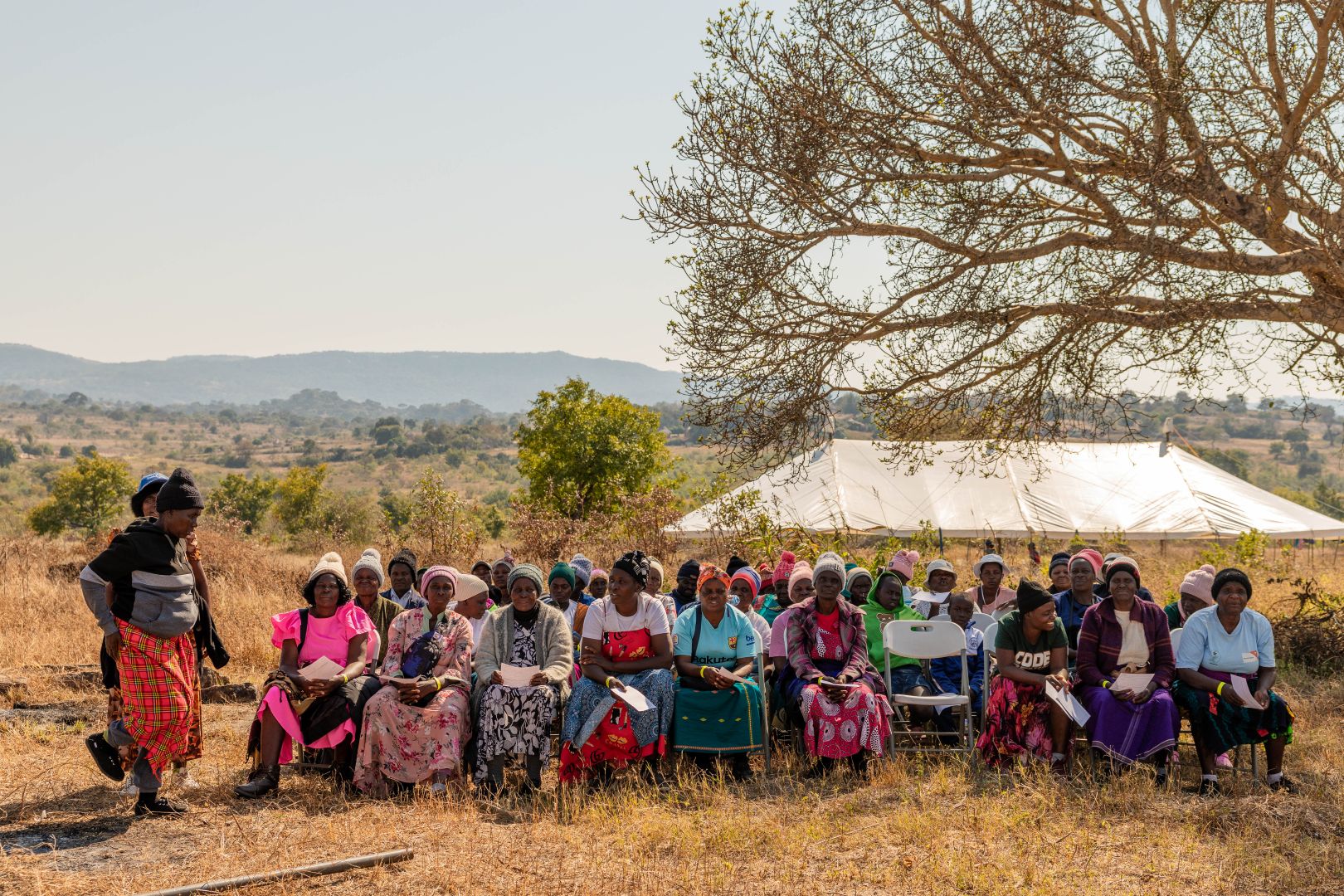
Descubre cómo un programa de atención médica en Zimbabue trajo sanación y esperanza. Más de 8,400 personas recibieron atención, 302 profesiones de fe, y ocurrieron sanaciones milagrosas.

Where is Jewish Voice going next? We’re headed to Malawi to bring humanitarian aid in the form of medical, dental, and eye care to a Jewish community and their neighbors of all faiths. We’ll also be praying for and sharing the Gospel with those who come to our voluntary prayer room. Here are ways you can pray day by day for this Medical Outreach.