Why do we mark the anniversaries of horrific days in history? Dates like December 7, June 6 and September 11 mark tragic events that grieve the heart.* Some people may not want to bring the somber past into the present with a day of remembering. Why dwell on it? Why pull from the record books stories of the tragedy and suffering?
We – as a world community, as nations, as individuals – commemorate for several reasons:
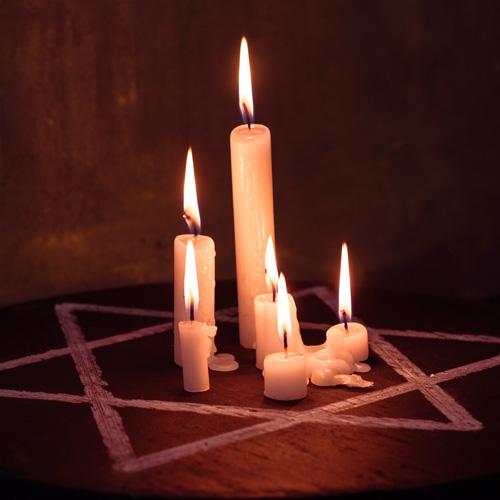
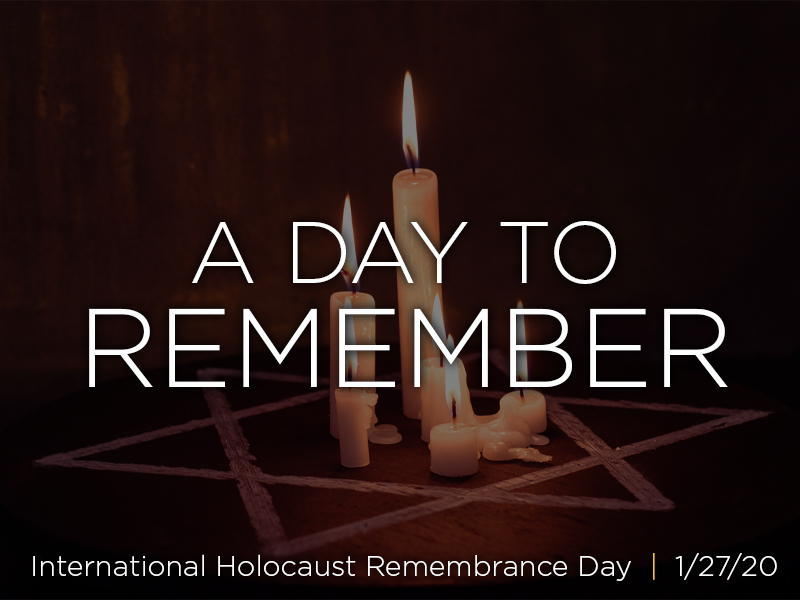
We at Jewish Voice remember the Holocaust on three distinct occasions each year. In late spring, we commemorate Israel’s national Yom HaShoah, honoring those who died in or survived the Holocaust. In November, we mark the anniversary of Kristallnacht, a devasting pogrom that unleashed Hitler to forge ahead with his “Final Solution” to eradicate “the Jewish problem.” And in January, we highlight International Holocaust Remembrance Day, which is observed on January 27, remembering the liberation of the Auschwitz extermination camp. This year marks 75 years since the day that the traumatized and near-starved prisoners who remained in Auschwitz were freed.
During World War II, Germany herded between 1.3 and 1.5 million people, most of them Jewish, to Auschwitz and its subcamps. Of those, approximately 1.1 million were killed. Others were kept alive as forced labor doing the gruesome work that followed the mass murders.
Paula Lebovics was part of a group of children that the infamous Dr. Joseph Mengele brought into a room at Auschwitz one day in January 1945. He had them stand in a circle around him, and he seemed to talk kindly to them. He said he knew that all of them had family they wanted to reunite with, and it could be arranged for them. “Come forward if you want to reconnect with your family.”
Paula stepped forward. Immediately, a younger girl that had attached herself to Paula stepped up beside her. In a mere second, Paula’s mind swam with warnings: How do they know where my family is? What if when I give information about my family, I put them in jeopardy? This could be a bad thing.
Paula instantly stepped back. She begged the little girl, who had taken to doing whatever Paula did, to return to the outer circle. But she refused. Later in the month, when Paula and the other prisoners of Auschwitz were liberated, right outside the camp, they found the bodies of those children who stepped forward that day. They had all been shot.
Miriam Ziegler was a young girl at the Auschwitz-Birkenau camp. In January 1945, as Russian troops advanced on Auschwitz, German soldiers abandoned the camps. When the prisoners were sure they were alone in the compound, Miriam and other able children walked to the main Auschwitz camp and broke into storerooms of food and clothing. They returned with all they could bring to the sick and elderly, including Miriam’s grandmother. The prisoners put on layers of clothing underneath their striped uniforms to fend off the frigid winter temperatures.
Three days later, a few Germans returned and told the prisoners, “Whoever is able, line up, and we will walk you to safety.” Miriam believed it and got in line. But her great-aunt pulled Miriam and her cousin out, explaining that if they were required to walk for help, they might as well stay put. “And fortunately, we did,” Miriam said, “because, on the way, they shot every single person.” Thousands died in what became known as “Death Marches.”
The next day, the Russians came, and then the Americans. Miriam and the other prisoners were free.
Why do we remember the sober days of historical events? With the Holocaust, we remember because we live in a world that still practices the same hatred and illogical anti-Semitism that led to the murder of 6 million Jewish people. We remember because we must never forget, even though it is a painful recollection. To forget would dishonor those who suffered unfathomable cruelties. To let the Holocaust fade away with complacency would situate the world for the setting ablaze of anti-Semitism’s ongoing flickering flame. As we see more and more violence perpetrated on Jewish people around the world, we must not forget the far and horrid distance to which such hatred can go.
We remember because we need to resolve, “Never again!”
Miriam Ziegler told her story to The USC Shoah Foundation as part of a video record of Holocaust testimonies.
Paula Lebovics told her story to The USC Shoah Foundation as part of a video record of Holocaust testimonies.
*June 6 is D-Day, when in 1944, Allied forces stormed the beaches of Normandy, France, suffering a devastating loss of lives while gaining access to the continent of Europe and eventually marching on to free Europe from Nazi Germany.
December 7 is Pearl Harbor Day, commemorating the lives lost when the Japanese enacted a surprise attack on a U.S. Naval base in Pearl Harbor, Hawaii, in 1941.
On September 11, 2001, Islamic terrorists hijacked commercial airplanes and flew them into the Twin Towers of the World Trade Center in New York City, the Pentagon in Washington, D.C., and a field in Pennsylvania, killing and injuring thousands of Americans.
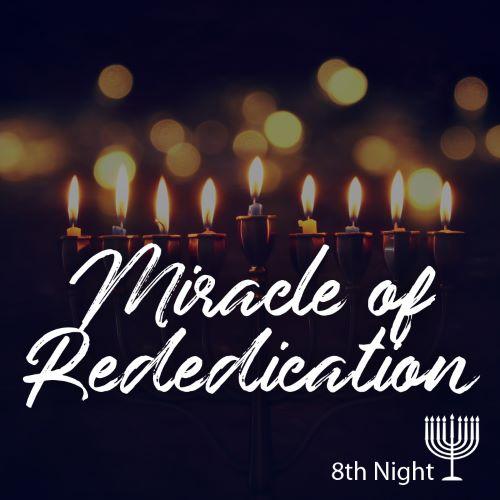
The word Chanukah means “dedication,” and the miracles the holiday celebrates center on the rededication of the Temple. The victory God won for the Maccabees brought a fresh start for Jewish worship. At last, they had their Temple back, and they could honor God as He had called them.
As Believers, whose bodies are called temples of God (1 Corinthians 6:19–20), we have the opportunity of renewed dedication every day. Each new dawn offers us the potential for starting over, drawing closer to God and watching Him work wonders of growth in our lives. His mercies and compassions are new every morning and open up opportunities for us to discover miracles latent in our rededication.
On this eighth night of Chanukah, we search our hearts to identify how we might need to rededicate our attention, discipline and faith to abiding in Jesus.
Place eight candles in the Chanukah lampstand tonight, setting them in the holders from right to left. As you light the Shamash, recite the Messianic Jewish Chanukah blessings:
Blessed are You, LORD, our God, King of the universe, who has sanctified us with Your commandments and has given us Yeshua the Messiah, the Light of the World.
Blessed are You, LORD, our God, King of the universe, who has performed miracles for our ancestors in those days at this time.
Using the Shamash, or Servant Candle, light the Chanukah candles in the opposite direction from which you placed them in the holders. Light them from left to right. Return the Shamash to its place. Let the candles go out on their own. They should burn for a least half an hour.
“Commit your way to Adonai” (Psalm 37:5a).
“Therefore, since we have such a great cloud of witnesses surrounding us, let us also get rid of every weight and entangling sin. Let us run with endurance the race set before us” (Hebrews 12:1).
“Let us hold fast the unwavering confession of hope, for He who promised is faithful” (Hebrews 10:23).
“His compassions never fail. They are new every morning; great is Your faithfulness” (Lamentations 3:22b–3).
“There is now no condemnation for those who are in Messiah Yeshua” (Romans 8:1).
“Therefore let us draw near to the throne of grace with boldness, so that we may receive mercy and find grace for help in time of need” (Hebrews 4:16).
Father, thank You that each new day, each moment, is bursting with potential for us if we will dedicate ourselves to You in it. Thank You for these opportunities for a fresh start and new hope. Thank You for working in our lives and being involved in our stories. May we seize each hour to rededicate ourselves to You so that we might see Your miraculous power alive and fresh in our hearts.
As we look at Chanukah and its miracle of light, we can’t forget the remarkable fact that God uses us to shine His light to the world. He places His Spirit inside each one who puts their faith in Jesus as the Messiah. And His light in us reveals Him to those around us. When we love as the Bible commands us and serve selflessly as Jesus did, we display God’s goodness and point a hurting world to Him.
New Covenant Scriptures call us to live by the power of God’s Spirit in us rather than from our old nature and our own strength. As we do, we exhibit the characteristics of His Holy Spirit, and His marvelous light shines forth into a world darkened by sin. (See Galatians 5:16, 22–25 and 1 Peter 2:9).
On this seventh night of Chanukah, we give thanks for the honor of shining God’s light to a dark world.
Place seven candles in the Chanukah lampstand tonight, setting them in the holders from right to left. As you light the Shamash, recite the Messianic Jewish Chanukah blessings:
Blessed are You, LORD, our God, King of the universe, who has sanctified us with Your commandments and has given us Yeshua the Messiah, the Light of the World.
Blessed are You, LORD, our God, King of the universe, who has performed miracles for our ancestors in those days at this time.
Using the Shamash, or Servant Candle, light the Chanukah candles in the opposite direction from which you placed them in the holders. Light them from left to right. Return the Shamash to its place. Let the candles go out on their own. They should burn for a least half an hour.
“For once you were in darkness, but now in union with the Lord you are light. Walk as children of light” (Ephesian 5:8).
Father of Lights, thank You for giving us Your Spirit and the privilege of revealing You to others as You live in us. Help us to abide in You, remaining close so that we will walk each day by Your Spirit, not falling into the ways of our old nature. May we seek Your presence hour by hour and lean in to hear Your voice. Help us to be quick to obey You so that nothing hinders Your light from shining brightly through us to a world starving for light.