Families in Israel need your help

October 08, 2021

When Neviah (we have changed her name to protect her privacy) and her husband immigrated to Israel from Azerbaijan with their two sons, she had hope for a brighter future.

Unfortunately, not long after their daughter was born, Neviah’s husband turned violent. He was an alcoholic and began drinking more. Neviah feared for herself and her children. After a particularly violent attack by her husband, the neighbors called the police, and he was arrested and put in jail.

Neviah worked two jobs to try to make ends meet — unfortunately the pandemic meant her housekeeping job was nearly nonexistent, making her family’s already tight budget even tighter.

Neviah, who is Jewish, had accepted Jesus as Messiah before moving to Israel. During this turbulent family crisis, she turned to a local Messianic congregation for help.

This congregation — that’s supported by Jewish Voice — was able to come alongside Neviah and her children in their time of need. Neviah says her faith has been strengthened as she’s seen God provide for her through the challenges of this last year and a half.

Your support to Jewish Voice meant we could provide grocery vouchers through our partners on the ground for the months Neviah and her kids needed help with food. We were also able to help meet other urgent needs, including orthopedic
shoes for her special-needs son and dental work for Neviah.

This hardworking mom continues to grow in her faith as she takes part in a peer support group with other single mothers. Her kids are involved in the youth program sponsored by our partner ministry in Neviah’s community.

You help make all of this possible — from meeting urgent physical needs to offering support and encouragement!

I hope you will give again right now to help other women and children in need like Neviah and her kids.

There are so many facing similar difficulties who need help. Struggling single moms. Women fleeing domestic abuse. Widows. Orphans. Please say yes today!

I can’t think of a more wonderful way to share the love and hope of our Messiah, Jesus, than by being His hands and feet through your support! And you, in turn, will be blessed when you give. In the book of Psalms, King David says it like this:

“Blessed are those who have regard for the weak; the Lord delivers them in times of trouble.” — Psalm 41:1 (NIV)

Because of your love for Israel and the Jewish people, I believe you’ll want to help meet this need and make a life-changing difference for someone like Neviah and her kids.

Knowing she can feed her children is like Neviah having a heavy burden lifted from her weary shoulders. And knowing someone cares gives her hope during a difficult season.

We must raise $172,000 to come alongside our ministry partners in Israel and make sure women and children who have nowhere else to turn get the help — and hope — they need.

For your gift of any amount, we would like to send you our 2022 Jewish Voice Wall Calendar, filled with images to remind you of the wonderful work you make possible through your support.

If you’re able to give $100 or more, we would like to add our Chanukiah. You’ll have your own nine-branched candelabra for Chanukah, designed especially for Jewish Voice partners. We’re offering the Chanukiah to you now so you’ll have time to prepare for your holiday celebration (Nov. 28-Dec. 6).

Thank you for doing what you can to make sure these women and children are cared for in the name of Jesus.

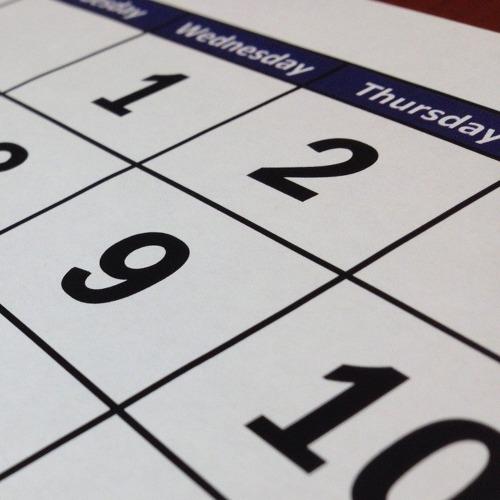
The Jewish Calendar

October 04, 2021

Why do Jewish holidays change dates every year?

Actually, they don’t. They just follow a different calendar.

Most of the world uses the Gregorian calendar, which is based on the solar year. The Jewish calendar is called lunisolar, meaning it is a combination of the lunar and solar cycles. The lunar cycle is the time it takes the moon to orbit the Earth, which happens monthly. The solar calendar is based on the time it takes the Earth to orbit the Sun, which is one year. As a lunisolar calendar, Jewish months are based on the lunar cycle while the Jewish year follows the solar cycle. To understand this and other differences between the Jewish and Gregorian calendars, let’s start with the day.

A Jewish Day

The Jewish day begins at sunset rather than at midnight. This follows the biblical account of Creation, which states, “…And there was evening, and there was morning––the first day” and so on throughout the week in which God created all things (Genesis 1:5 NIV). In this system, a calendar date’s morning comes after its evening. For example, when celebrating a holiday, festive evening gatherings and meals come a whole night’s sleep before the holiday’s morning synagogue services.

A Jewish Week

The Jewish week consists of seven days, just like the Gregorian calendar. However, the Jewish week begins on Sunday and ends on Saturday. The workweek in Israel is Sunday through Thursday with the weekend on Friday and Saturday. In the Gregorian system, the week begins on Monday with a Saturday/Sunday weekend.  Again, the Jewish calendar follows Scripture’s account of Creation. God rested on the seventh day, the Sabbath (Genesis 2:1–3). The Hebrew word for Sabbath is Shabbat, and it means “seventh day.” This is the Gregorian day of Saturday.

A Jewish Month

In the calendar system we’re used to, a typical month has 30 or 31 days – except February with 28 days in non-leap years. This Gregorian method of marking the passage of time is based on the solar cycle. In the Jewish calendar system, a month is based on the lunar cycles. Each month begins with the new moon and has either 29 or 30 days.

Jewish Months and Their Gregorian Equivalents

              Nisan                  30 days                            March/April

              Iyar                     29 days                            April/May

              Sivan                  30 days                            May/June

              Tammuz            29 days                            June/July

              Av                        30 days                            July/August

              Elul                     29 days                            August/September

              Tishrei                30 days                            September/October

              Cheshvan          29 or 30 days                 October/November

              Kislev                 30 or 29 days                 November/December

              Tevet                  29 days                            December/January

              Shevat               30 days                            January/February

              Adar                   20 days                            February/March

A Jewish Year
The Gregorian calendar system uses the year to determine the number and length of months. The Earth’s annual orbit around the Sun is divided into 12 months. However, because Scripture bases the beginnings of months on the appearance of new moons, the Jewish calendar determines the year by compiling months. Instead of a fixed year being divided by 12 months, set months are grouped to form a year.

This causes a problem similar to how that pesky quarter-day of a solar cycle creates 365 and ¼ days per year, requiring that we add an extra day to February every four years. Twelve lunar cycles add up to about 11 days short of a solar year. Without adjustment, Jewish calendar dates would eventually shift into different seasons. The Bible is clear that certain holidays are tied to harvest seasons of the year, so we can’t have that. To accommodate the difference, the Jewish calendar also factors in leap years, but in a different way.

Jewish Leap Years

To compensate and stay in sync with the seasons of a solar year, in 7 out of every 19 years, the Jewish calendar includes a 13th month called Adar II. But Adar II isn’t really the second month called Adar. It’s the first. Confused? Yes, it’s a bit complicated. The second Adar doesn’t slip into the calendar after the regular Adar. The leap-month Adar is inserted into the Jewish calendar before regular Adar and takes its name as well. The added month becomes Adar, and the regular Adar becomes Adar II. Thankfully, experts keep track of all this, and all we have to do is look it up on the internet or buy a wall calendar.

Jewish New Years

Interestingly, there are multiple Jewish New Years. The primary ones are the biblical and religious New Years. The difference is similar to that created by a fiscal year in the business world. In the biblical year, Nisan is the first month, occurring in March or April. As time went on, the Jewish sages came to believe that God created the Earth on the first day of the seventh month, Tishrei, which falls in either September or October. Thus, the Feast of Trumpets or Yom Teruah became known as Rosh Hashanah, meaning “head of the year,” on the 1st of Tishrei. The biblical year runs from Nisan to Adar, and the religious year is from Tishrei to Elul.

Jewish Year Tally

Another significant difference between the Hebrew and Gregorian calendars is seen in the year count. The Gregorian marks the presumed year of Jesus’ birth as Year 0, adding forward and subtracting backward through history from there. Thus, we have B.C. and A.D., more recently referred to as B.C.E. (Before the Common Era) and C.E. (Common Era). The Jewish tally of years begins with Creation and adds forward. Thus, according to the Gregorian calendar, Israel was reborn as a nation on May 14, 1948, C.E. On the Jewish calendar, the date was Iyar 5, 5708.

So, the next time you ponder how Yom Kippur can be weeks later or earlier than it was last year… or you marvel to see a Jewish New Year message ringing in a year almost 4,000 years larger than what you’re used to… you’ll know how it all makes sense. Everything is in order: Jewish holiday dates don’t change on the Jewish calendar, just on the Gregorian.

To learn more about the Jewish calendar, watch “The Significance of the Jewish Calendar” on the Jewish Voice television show.

Iron Dome controversy and the U.S. relationship with Israel

October 01, 2021

“I will bless those who bless you.”
Genesis 12:3a (NIV)

Shalom, my friend. 

I’m thankful to God for partners and friends who are eager and generous in their support for Israel and her people. Please know you are valued and your prayers are deeply appreciated. 

That’s why I wanted to make sure you saw the anti-Semitic sentiment in the words and actions of some of America’s elected representatives last week regarding the U.S. providing critical funding for the Iron Dome Defense System. And while the U.S. remained true to one of our closest allies, we must be vigilant to continue to pray for — and stand with — Israel and the Jewish people. These are God’s Chosen People — whom He called and led thousands of years ago. And through whom He revealed His Messiah, Yeshua (Jesus), to the world through the Gospel. 

So please join me, and everyone at Jewish Voice, in praying for divine peace and for God to change the hearts of those who stand against His people. And may you and yours experience the blessing of God in a special way. 

U.S. HOUSE APPROVES FUNDING FOR IRON DOME BUT NOT BEFORE BITTER CRITICS THREATEN GOVERNMENT SHUTDOWN

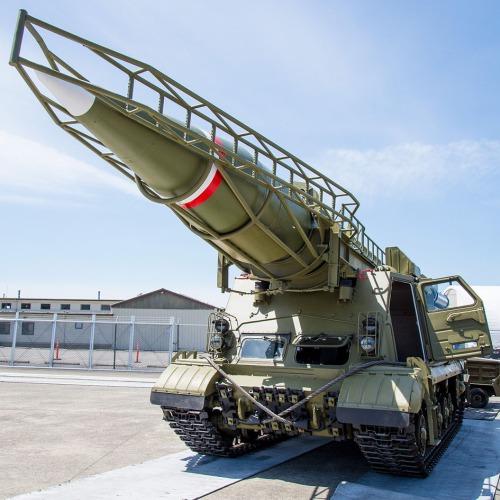
The U.S. House overwhelmingly approved $1 billion in new funding for Israel’s Iron Dome missile defense system late last week. But this approval only came after a bitter fight from vocal anti-Israel and anti-Semitic members of Congress. 

The New York Times reported the final vote was 420 to 9 to help Israel replace missile interceptors after a missile war and heavy fighting with terror groups along the Gaza Strip earlier this year.  The provision was originally included in a larger spending bill meant to fund the government through December. However, a group of vocal anti-Israel representatives stated that they would not help pass the larger bill if Iron Dome funding was included. This would have led to a government shutdown.

In response, House leaders stripped the Iron Dome provision out of the emergency spending bill and arranged a separate vote to approve the Iron Dome money.

Following the landslide vote in favor of the Iron Dome funding, one of the most vocal critics, Representative Rashida Tlaib, said, “I will not support an effort to enable war crimes and human rights abuses and violence. We cannot be talking only about Israelis’ need for safety at a time when Palestinians are living under a violent apartheid system and are dying from what Human Rights Watch has said are war crimes.”

The Times of Israel reported that May’s rocket fire included over 4,300 rockets from Hamas and other Gazan terrorists targeting Israel, which according to the Israel Defense Forces (IDF), was the highest ever.

According to the IDF, 90% of the missiles fired at populated areas within Israel were downed by the Iron Dome.

The American Israel Public Affairs Committee (AIPAC) released a statement saying:

“Extremists in Congress are playing politics with Israeli and Palestinian lives. Calling to remove funding for a life-saving defensive system is an affront to our values, risks further conflict and is counter to the commitment made by Biden and supported by Congressional leadership. It’s simple: Iron Dome saves lives. Blocking funding for Iron Dome helps terrorists kill civilians.” 

ISRAEL PREPARES FOR MORE ROCKET FIRE AFTER DEADLY WEST BANK RAIDS

The Jerusalem Post reported that two IDF soldiers were injured and five Palestinians were killed after armed clashes broke out during a wave of anti-Hamas operations in the West Bank earlier this week.

According to The Jerusalem Post, the operation included a number of arrests in five different locations in the West Bank, targeting a Hamas cell that Israeli security forces had been tracking for several days. The cell was planning an attack. 

IDF told media personnel that it was possible that Hamas would decide to fire rockets from Gaza in response to the operation. “This was a Hamas cell, one that we have been following for a long time with intelligence from the Shin Bet. There’s always a chance that there can be rockets, especially since this was a Hamas cell and the group is always trying to connect Gaza to the West Bank,” IDF Spokesman Brig.-Gen. Ran Kochav said.

The Jerusalem Post reported that the raids were led by the Duvdevan counter-terrorism unit as well as the Israel Police and Border Police YAMAM, YAMAS counter-terrorism units and the Shin Bet security services.

NUCLEAR STANDOFF WITH IRAN REMAINS UNCLEAR — ISRAEL AND U.S. OFFICIALS SECRETLY CONVENE TO DISCUSS A “PLAN B”

In the first U.N. General Assembly address early last week, U.S. President Joe Biden called on Iran to return to the nuclear deal.

According to The Jerusalem Post, since taking office in January, President Biden has unsuccessfully sought to revive the 2015 Iran deal, which former U.S. President Donald Trump’s administration exited in 2015.

“We are working to engage Iran diplomatically, to seek a return to the Joint Comprehensive Plan of Action (JCPOA). We are prepared to return to full compliance if Iran does the same,” President Biden said to the General Assembly. He underscored, however, that the “United States remains committed to preventing Iran from getting a nuclear weapon.”

And while negotiations are hoped to kick start again in the near future, the potential outcome remains unclear. 

The Jerusalem Post reported that there was a deal in hand under the previous Iranian government in May for a reciprocal return to the 2015 JCPOA. But under the new radical regime in Iran led by President Ebrahim Raisi, the Biden administration is ready to engage in new negotiations – whose results would either be the same or lead to new American concessions.

The premise of Biden’s approach, reported by The Jerusalem Post, has been that he is ready to give up U.S. leverage of worldwide sanctions on Iran if the ayatollahs will cease their 60% uranium enrichment violation of the JCPOA and fully restore International Atomic Energy Agency inspections.

According to Axios, the U.S. and Israel recently held secret talks on Iran to discuss a possible “Plan B” if nuclear talks are not resumed. 

The meeting was held via a secure video conference call and led by U.S. National Security Advisor Jake Sullivan and his Israeli counterpart, Eyal Hulata.

While both the U.S. and Israel are concerned about the current stalemate in diplomatic talks with Iran — including a range of issues related to the challenges and threats Iran poses to Israel — U.S. officials are reportedly willing to impose additional sanctions on Iran to get them to the negotiation table more quickly. 

Let Us Pray Together

Please pray with me for:

  • God’s grace and peace to turn the hearts of Israel’s enemies 
  • God’s protection as terror groups along the Gaza Strip — and surrounding Israel — continue to threaten His people with violence and acts of terror 
  • God’s wisdom to be poured out on the world’s leaders in handling the nuclear threat from Iran
  • Peace in the hearts and minds of the people of Israel and their enemies
  • Jewish people to recognize Yeshua (Jesus) as their Messiah

Simchat Torah – The Joy of My Heart

September 27, 2021


It is good and just.
It is trustworthy and faithful.
It is firm. Boundless. Eternal.
It is true and right, thoroughly tested.
It is wonderful and delightful.
It is sweeter than honey.
It is more precious than thousands of pieces of silver and gold.

So says the writer of Psalm 119. What does he speak of? The Word of God.

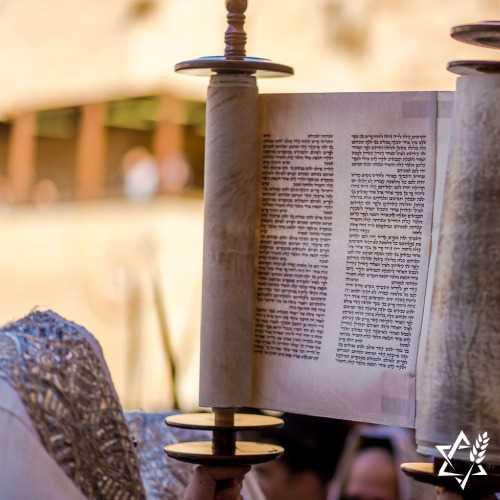
Simchat Torah means “Joy of the Torah.” It is a holiday set aside to celebrate the gift of God’s Word. Jewish people stay up through the night reading the Torah, and in synagogue services the next morning, congregants parade the Torah scroll around the room, dancing, leaping and shouting with joy. Worshipers make many circuits to allow as many people as possible to carry the Torah scroll.

Simchat Torah marks the completion of the annual reading cycle that takes us through the first five books of the Bible in a year. Jewish people the world over follow the same weekly reading plan. In synagogue services on Simchat Torah, we read the final Torah portion, or parasha, and then immediately read Genesis chapter one to remind us that our need for God’s Word is endless. As the weekly reading cycle starts over with the first parasha, we begin another year of reflecting on the very words of the Lord Almighty.

In its most literal sense, the Torah refers to the Pentateuch, the first five books of the Hebrew Scriptures (Genesis, Exodus, Leviticus, Numbers and Deuteronomy), written by Moses. As the word Torah, in Hebrew, means “instruction,” its broader interpretation encompasses the entire Word of God.

God is our Rock. He is true and good, and He loves us beyond comprehension. We know this because of His Word. Scripture anchors us to the Lord in truth. It shows us who He is, what He has done for us and what He will do one day to restore all things. There is hope in God’s Word. There is great joy on its pages and within its lines.

On Simchat Torah, take some time to reflect on the incredible gift given to you in God’s Word. Open it up and pray along with Asaph, who said in Psalm 119:18, “Open my eyes, so I may behold wonders from Your Torah.” May the Word of God be your delight and the joy of your heart forever (Psalm 119:77 and 111).

Historic Abraham Accords and what it means for the future of Israel

September 23, 2021

“Pray for the peace of Jerusalem: ‘May those who love you be secure. May there be peace within your walls and security within your citadels.’”
Psalm 122:6-7 (NIV)

Shalom, my friend. 

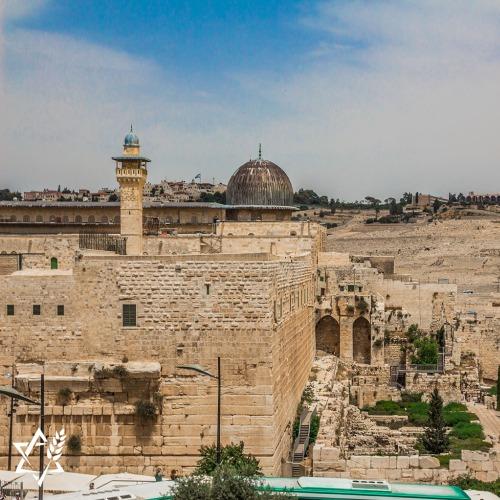
While we celebrate many victories this week – including the one-year, historic celebration of the Abraham Accords and the capture of the final two escaped prisoners - I’m reminded by the Scriptures that we must remain vigilant in praying for continual peace.

That’s why I want to invite you to continue to pray with me and everyone at Jewish Voice on behalf of God’s people. 

ABRAHAM ACCORDS CONTINUES TO SHAPE THE MIDDLE EAST, ISRAEL AT THE HEART

Representatives from member countries of the Abraham Accords gathered in Washington last week to mark the one-year anniversary of the historic peace and trade agreements between Israel and the UAE, Bahrain, Morocco and Sudan.

Prior to the Accords, according to The Jerusalem Post, Israel had diplomatic ties only with Egypt, with which it signed a peace treaty in 1979, and Jordan, with which an agreement was reached in 1994.

The event was held two days after the actual September 15 anniversary date of the White House ceremony that allowed Arab states to normalize ties with Israel. And this one-year gathering happened at a time when much concern and focus in the Middle East is on Iran and their acceleration of nuclear capabilities. 

The Jerusalem Post reported that Israel’s Ambassador to the U.S. and the U.N., Gilad Erdan, said in response to the recent New York Times report indicating that Iran is just weeks away from having enough uranium for a nuclear weapon:

“I think it doesn’t make a real difference if the Iranians are one month or two months or three months [away], they are closer than ever to becoming a nuclear threshold state. And in addition to the fact that they have the most radical president ever, their supreme leader still believes that Iran should possess a nuclear bomb. This is a huge red flag to the international community: Do something about it. You cannot continue allowing Iran to drag its feet, playing its game of maneuvering, and simultaneously advancing its nuclear capability. Because we will wake up one day [and realize that] it might be too late. “This is the time to act, and I hope to see the international community getting together and making it clear to Iran that they’re going to pay a huge price for this illegal advancement.”

The Jerusalem Post also reported that Israel’s Foreign Minister, Yair Lapid, also called on other Arab countries to join the Accords, saying: "We’re going to make this a bigger and bigger event and a bigger and bigger initiative for peace in the region."

This will include helping to strengthen Israel's burgeoning ties with the UAE, Bahrain, Morocco and Sudan, Lapid is reported to have said. And he also spoke of supporting Kosovo's new ties with Israel, even though the country is not part of the Accords.

Israeli Prime Minister Naftali Bennett told The Jerusalem Post, “These unprecedented agreements are a new chapter in the history of peace in the Middle East. Relations between the countries are only at their beginning and are already bearing many fruits. The government of Israel under my leadership will continue to implement the agreements while striving for a stable, secure and prosperous Middle East for the future of our children.”

ISRAEL CITES ECONOMIC CRISIS FOR ALLOWING HEZBOLLAH OIL SHIPMENTS TO REACH ENERGY-STARVED LEBANON

The Times of Israel reported that the first of the oil convoys from terror groups entered Lebanon late last week. While the Iran-backed terrorists touted this as a major victory within the region, Israeli officials cited Beirut’s economic crisis for their lack of interference.

According to The Times of Israel, dozens of trucks carrying Iranian diesel arrived in Lebanon late last week, traveling through neighboring Syria in violation of U.S. sanctions imposed after the U.S. pulled out of a nuclear deal between Iran and world powers in 2018.

The shipment is being portrayed as a victory by Hezbollah, which stepped in to supply the fuel from its patron, Iran, while the cash-strapped Lebanese government grapples with months-long fuel shortages that have paralyzed the country. Hezbollah operates independently from Lebanese authorities, which are struggling to deal with a crippling energy crisis.

While Israel has carried out hundreds of airstrikes in Syria to prevent Hezbollah weapon shipments from reaching their targets, officials are concerned that targeting the fuel would be seen as needlessly harming the economic recovery of Lebanon.

The Times of Israel reported that groups of Lebanese gathered on the roadside to greet the convoy. Hezbollah’s yellow flags and banners praising the Iran-backed group and Syria’s President Bashar al-Assad decorated the streets. Many raised banners reading: “Thank you Iran,” and “Thank you Syria.” Heavy gunfire, and at least one rocket propelled-grenade, were fired in celebration.

However, many Israeli officials - and other officials within the region - see the convoy as a symbol of the dissolution of the Lebanese state. And while the oil delivery was seen as a victory for Hezbollah, the group is also facing growing internal criticism for increasingly pulling Lebanon into Iran’s orbit and for defending its political allies who resist change rather than push for reform.

ISRAELI FORCES ARREST FINAL TWO ESCAPED PRISONERS, ENDING THE TWO-WEEK MANHUNT

The recapture of the last two prisoners who escaped from Gilboa Prison late last week marks the end of the manhunt that began earlier this month.

According to The Jerusalem Post, the final arrests were made by the Israel Defense Force (IDF), Shin Bet and police special forces, based on intelligence from the Shin Bet (Israel Security Agency). The operation was overseen by Brig.-Gen. Yaniv Alaluf, the head of the IDF’s Judea and Samaria Division, which is responsible for the West Bank, and by Col. Arik Moyal.

The IDF released a statement saying, “The Yamam, Shin Bet and the Haruv Reconnaissance Unit entered the city of Jenin, sealed off and surrounded the house, including use of gunfire around the building in which the fugitive terrorists were hiding. They came out unarmed and without resistance. The two terrorists were caught alive and were handed over for interrogation by the security forces.”

The Jerusalem Post reported that in order to prevent a large-scale confrontation with Palestinians, a large number of security forces entered different parts of the Jenin as a distraction. Gunmen in Jenin associated with several militant groups, including Fatah, Hamas and Palestinian Islamic Jihad, had warned that they were prepared to thwart any attempt by the IDF to enter the city or its refugee camp in search of the two security prisoners. They formed a “Joint Operations Room” to repel a possible “invasion” by the IDF.

While security forces were leaving the city, clashes with Palestinians erupted in a number of locations where they threw stones and explosives and opened fire toward Israeli forces. Three Palestinians were moderately wounded during the clashes, according to the reports. No injuries were reported among Israeli forces.

The recapture of Ayham Kamamji and Munadel Enfayat is a blow to the Fatah and Palestinian Islamic Jihad (PIJ) gunmen in the Jenin refugee camp who had over the past few days pledged to defend the fugitives and foil any attempt by the IDF to enter the camp or the city of Jenin, the residents said.

Let us pray together

Please pray with me for:

  • God’s grace and peace to continue to permeate the Middle East and the broader region 
  • God’s protection to be upon His people as Iran-backed Hezbollah – and other terror groups – continue to strengthen their grip on Lebanon and Israel’s northern border 
  • God’s wisdom to be poured out on the world’s leaders in handling the nuclear threat from Iran
  • Peace in the hearts and minds of the people of Israel and their enemies
  • Jewish people to recognize Yeshua (Jesus) as their Messiah

What does it mean to bless Israel?

September 21, 2021

“Brothers and sisters, my heart’s desire and my prayer to God for Israel is for their salvation.”
(Romans 10:1 TLV)

I’m so thankful you share my love and concern for Israel and her people. Together, by meeting needs and sharing the Good News with Jewish people,
you and I play a role in fulfilling prophecy!

The Bible tells us that the spiritual restoration of Israel is essential to the return of Jesus and the fulfillment of God’s plan.

In the verse above — Romans 10:1 — you can see that Paul urged the Gentile churches to pray for Israel’s salvation. Today, we are to do the same. And we must not only pray, but take the opportunities we are given to introduce Jewish people to Yeshua (Jesus) as their Messiah.

So when we pray for the Jewish people and give to help meet their critical needs, we bless Israel. And this opens the door to share the Good News — the greatest blessing!

In Israel, Jewish Voice works with more than 80 partner organizations to meet important basic needs for the most vulnerable, including groceries for struggling families and dental care for Holocaust survivors.

That’s why our goal is to raise $286,650 this fall to bring help and hope to Jewish people in Israel. This is the amount that we’ve committed to invest in this
urgently needed ministry to provide for our partners there.

Please prayerfully consider sending a gift today to help meet urgent needs and open the door to share the Gospel with God’s Chosen People.

And as I write this, Israel has experienced a spike in coronavirus cases as a result of new variants from India and South America. So many are dealing with the consequences of the pandemic — lost jobs, extended sickness, the death of loved ones and more.

But even beyond the coronavirus pandemic, Israel is under constant threat from enemies near and far:

  • IRAN: The Iranian government sponsors terror groups who openly profess their violent goal: to annihilate Israel and the Jewish people.
  • HAMAS AND OTHER TERRORISTS IN GAZA: These radical groups continue to fight against Israel – from using constant smaller attacks to firing rockets on Jerusalem (which led to the 11 days of violence this spring) and destroying the homes of Israeli citizens.
  • WORLDWIDE HATRED: Anti-Semitism has been on the rise and the outbreak of fighting in May stirred up more incidents of violence against Jewish people in Israel and around the world.

You and I need to stand with Israel because God calls us to bless His people. The salvation of Israel is a key part of God’s plan.

Prayer Points: You make this life-saving work possible

September 20, 2021

We are so grateful to be headed to Ethiopia again! We appreciate your prayer covering for this Outreach – before, during and after. Your intercession prepares the way not only for the Outreach week but also for the ensuing months and even years. This Medical Clinic will be held in an area with both Orthodox and Evangelical Christians and where local Messianic Believers are already reaching out to other Jewish people. We are excited to partner with them to see Jewish people blessed in the name of Yeshua and come to know Him.

Here is some more information regarding the Outreach, the area, and how you can pray along with us during this critical time. Thank you for your prayers!

Wednesday, September 22–Wednesday, September 29 | Preparations – Isaiah 40:3

We are excited to minister to serve the Gefat Jewish people in partnership with the local Bete Kidan Messianic Congregation already ministering there.

  • Pray for safety and efficiency as preparations are made
  • Pray for the preparation of the region, the hearts of the people and the spiritual atmosphere

Thursday, September 30–Friday, October 1 | Travels and Adjustments – Joshua 1:9

We will have a small but excellent group of Outreach Partners joining us for this Outreach. Please pray for:

  • Protection, travels, health and on-time arrivals
  • Favor at each checkpoint and no delays
  • Safety on the drive to the hotel and Clinic site
  • Protection against disease
  • Partners and staff to begin the Outreach rested and excited
  • Blessing and evidence of Yeshua’s (Jesus’) love to flow from us to all whom we encounter

Saturday, October 2–Sunday, October 3 | Set-up and Clinic Opening – Philippians 4:19

These two days will be full of adjustments and preparations for the Clinic to open on Sunday. Pray for:

  • Unity of the Spirit and all to work as unto the Lord
  • Successful training meetings for medical/dental staff as well as Outreach Partners
  • Patient lines of patients to be orderly and efficient
  • Many Jewish people to hear about the Medical Outreach and come

Monday, October 4–Wednesday, October 6 | Worship and Work – Psalm 77:14

This Outreach will have medical, dental and eye care and a pharmacy, plus opportunities for spiritual ministry! Please pray for:

  • The Living Waters team, taking LifeStraws® and Good News into the community
  • Congregation members who will be offering prayer and sharing Jesus
  • A special time of worship and prayer together Tuesday night
  • Healing, signs, wonders, and miracles, confirming the life available in Jesus
  • Testimonies of God’s goodness to draw many to believe

Thursday, October 7–Sunday, October 10 | Closing and Returning – Psalm 46:8

We pray for God’s Kingdom to continue expanding in this part of Ethiopia as Jewish people and their neighbors receive salvation and come together for ongoing fellowship. Pray for:

  • A peaceful Clinic closing on Thursday and that we will have seen as many patients as possible, blessed the local workers and left the fragrance of Messiah in the community
  • The partnering Messianic congregation will be able to follow up effectively in the community, leading to the planting of a second congregation there
  • Understanding of God’s heart for the Jewish people to grow in the community
  • Safe travels home and good health for each Outreach member

Sukkot: The Choice to Rejoice

September 20, 2021

''

We usually think of joy and happiness as emotions that come to us as a result of pleasant circumstances or good news. But God’s instructions for the Feast of Sukkot reveal that we are more than passive recipients of joy. The fact that He commands Israel to rejoice shows us that joy can be our choice (Leviticus 23:40). 

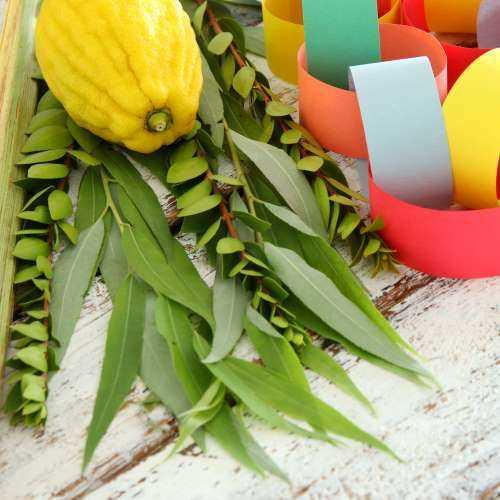
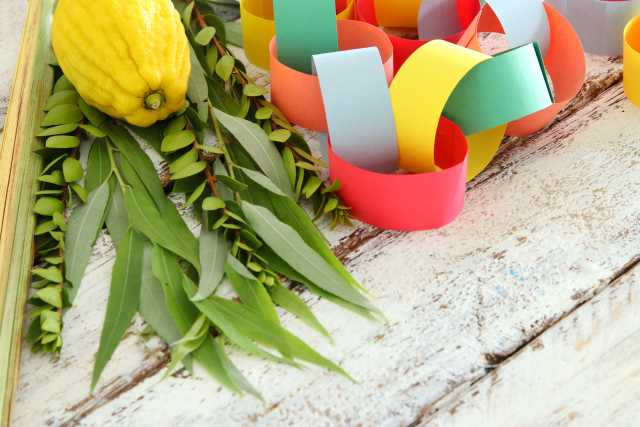
Sukkot is a seven-day festival where God commands the Jewish people to do no work on the first day and come together for a sacred assembly. Synagogue services today include waving a lulav, a bundle of four specific types of vegetation, based on Leviticus 23:40, where God instructed Israel to take these branches “and rejoice before the Lord.” 

Sukkot is also a harvest festival for which every physically able male was to take the first of his fall harvest to Jerusalem as an offering to the Lord. Sukkot is also sometimes called the Feast of Ingathering because it celebrates the last harvest before winter.

The most unique observance of Sukkot is God’s command to build temporary structures and live in them for seven days. The Bible refers to these as booths or tabernacles, which is why Sukkot is also called the Feast of Booths or Feast of Tabernacles. Each family builds a sukkah (the singular of sukkot) in their yard or on their patio or balcony. We take our meals, entertain guests, and sometimes sleep in our sukkot. And we rejoice.

Rejoicing in obedience to the Lord is possible when we set our minds on the right things (Philippians 4:8). Sukkot provides a meaningful opportunity to develop this strength-giving habit and provides us with several reasons to rejoice ¬– reasons that transcend circumstances because they are based on God. Three of the many reasons to rejoice include God’s provision, His Promise and His presence.

God’s Provision 

The booths of Sukkot remind us of God’s provision for our ancestors who lived in tents in the wilderness for 40 years. God protected us, provided for our needs and supplied food each day. He made water spring from rocks, and He supernaturally prevented our clothes and sandals from wearing out through all that time. Living in a sukkah for seven days each year offers a vivid reminder of how God continues to care for us today. It may not always be in the way we want, but God provides for our needs.

God’s Promise 

As Jewish people throughout the world look up at the evening sky through the leafy roof of our sukkot, we remember God’s promise to make Abraham’s descendants as numerous as the stars of the heavens. God keeps His promises. Sukkot celebrates His steadfast love and faithfulness. 

God’s Presence

God was with Israel when we wandered in the wilderness. He was present with us in the pillars of cloud by day and fire by night. Later, His presence dwelled in the Tabernacle. Moses prayed, “If Your presence does not go with us, do not send us up from here” (Exodus 33:15 NIV). Reflecting on Israel’s years in the Sinai desert reminds us of the gift of God’s presence. As Messianic Jewish Believers who have placed our faith in Messiah Jesus, we have God’s Holy Spirit dwelling within us. (1 Corinthians 3:16). God is always with us and will never leave us.  

God commanded the Jewish people to rejoice at Sukkot, showing us that, no matter what circumstances may be, joy is a choice. Even if times are hard, we can see that He has given us great reasons to rejoice because – He has given us Himself.

Applying Sukkot to Your Life

  • How has God provided for you recently?
  • How has God blessed you through His biblical promises?
  • How might you be able to enjoy God’s presence more in your life?
arrow-up icon