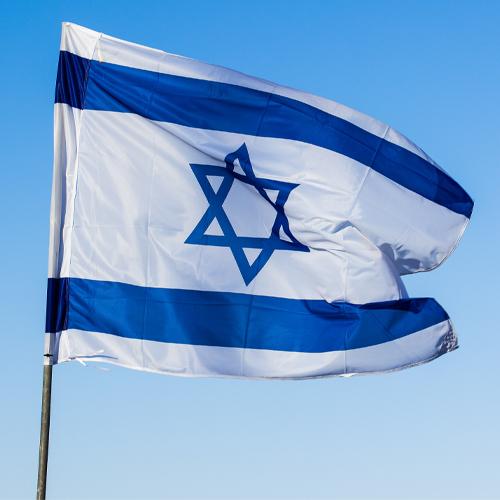
An invitation to step out in faith for the Jewish people...

September 21, 2020
An invitation to step out in faith for the Jewish people...

If there’s a message our world — and especially the Jewish community — needs today, I believe it’s this: “Life is hard. But God is good.”

In my own life and ministry, God has proven Himself to be loving, true and good. Sometimes He calls on us to wait on Him and listen. Other times He calls on us to act.

That’s why I’m writing — to ask you to stand with Israel, to act on behalf of Jewish people today.

As you know, Jewish communities are constantly under fire — from enemies that surround Israel, to a recent increase in anti-Semitism. And the coronavirus continues to be a problem in Israel and other countries where Jewish Voice ministers.

Thankfully, we need to look no further than Scripture for a compelling reminder of God’s faithfulness.

An ancient lament

Lamentations is an amazing glimpse at the heart of a prophet, the gripping response of God’s servant Jeremiah — his lament — as 2,600 years ago he surveyed the ruined city of Jerusalem, destroyed by the Babylonians.

In what can almost be called a poem, Jeremiah’s words are full of anguish as he describes the terrible devastation, the loss of life and the starvation of a city under siege.

But then, he turns from pain to promise, from horror to hope in the certainty that God will redeem the city and restore His people:

“This I recall to my heart therefore I have hope: Because of the mercies of Adonai we will not be consumed, for His compassions never fail. They are new every morning! Great is Your faithfulness”

(Lamentations 3:21-23).

Just imagine. Amid this great suffering, God shows through Jeremiah that He is a God of mercy, grace, and truth. He is good! If only we will trust Him.

I want to invite you to be part of God’s enduring promise — so dramatically foretold by Jeremiah — to bring eternal redemption to the Jewish people, especially those who are struggling to survive in Israel right now.

God wants to do so much good for His people! But I believe He is looking to you and me to join Him in faith to help deliver that good. There’s no better time than now for us to do so. But we need to trust Him.

What’s more, as I write you today, the coronavirus continues to cause serious problems in Israel. The government has struggled to stop the spread and move the economy toward recovery.

Sadly, among the most at risk is the elderly population. Because of their advanced age and preexisting medical conditions, they’re among the most vulnerable people in Israel.

And, finally, a fascinating development presents us with even more opportunity for ministry. Israel is experiencing an influx of Jewish immigrants from Ethiopia and other nations. Many are among the Beta Israel, one of the “Lost Tribes of Israel,” who are being allowed to move back to Israel. Jewish Voice is highly committed to meeting their spiritual needs.

What trust in God looks like

Because we care so much about the future of Jewish people in Israel, and because we believe in the redemption promised by God in Lamentations, Jewish Voice is stepping out in faith with a promise to provide $1,335,500 by year’s end to support Messianic ministries in Israel.

It’s a huge commitment, I know. We want to do everything we can to bring the saving message of Yeshua (Jesus) to the lost sheep of Israel — before it’s too late.

That is why we need your help! Your gift now will be put to work immediately to bless the Jewish people through dozens of kingdom-building partnerships in Israel to provide:

•            Humanitarian relief essentials like food, medical support and dental care

•            Ministry to widows, orphans and single moms — especially those who face crisis

•            Training for Messianic congregations to raise up the next generation of Messianic leaders

•            Discipleship and evangelism to advance the Gospel

•            Much-needed support and services for new immigrants to Israel who are struggling to make a new life in Israel

I’m counting on your participation now more than ever. The simple fact is, we can’t do it without you.

This is a tangible, practical way to truly bless the Jewish people. It isn’t about dollars and cents. It’s about introducing them to their Messiah, Yeshua.

Won’t you stand with me now — with a gift of $20, $40, $60 or even more? You’ll demonstrate your faith and compassion for the Jewish people.

God has a plan for His people. He’s carrying out that plan right now, just as He has since before time. What a joy to be part of it — to help bring the Jewish people to Yeshua, leading to a dramatic, worldwide restoration.

This is what you’ll be a part of when you join us to support Israel and her people with your gift today.

Please don’t wait. We’ve promised to provide $1,335,500 by December 31 to support our Messianic ministry partners in Israel. And we must follow through.

That’s why I believe God is already moving in hearts now. And I hope in yours too. Thank you. And God bless you.
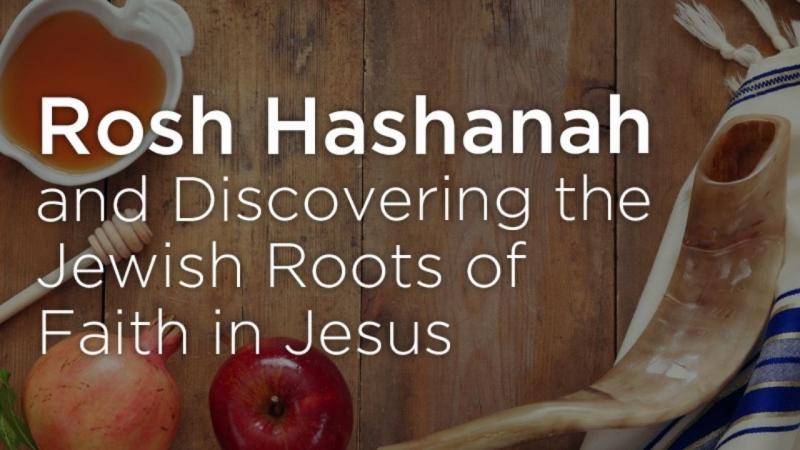
Rosh Hashanah and Discovering the Jewish Roots of Faith in Jesus

September 18, 2020
Rosh Hashanah

For those curious about the Jewish roots of faith in Jesus, the biblical Feasts of Israel are an excellent place to start. What do we mean by Jewish roots? The Bible, from Genesis to Revelation, is one cohesive message from God to mankind. The history of Israel and God’s relationship with her is relevant for all Believers, whether we’re Jewish or Gentile, because the New Testament builds upon the established foundation of the Old.

Jesus’ life, death and resurrection are loaded with mirrored reflections of God’s interactions with Israel and the Feasts He called her to observe. Discovering these Jewish roots of the New Testament instills in us deeper awe of God’s intricate redemption plan.

Right now, we are approaching the Jewish holiday of Rosh Hashanah, the Jewish New Year. For the last several weeks, Jewish people the world over have engaged in a season of reflection and repentance leading up to Rosh Hashanah, which means “head of the year” in Hebrew. The holiday is based on the Jewish teaching that God created the world on the first day of the Hebrew month of Tishrei. Because of this, the Jewish calendar turns over on Tishrei 1 to mark the beginning of a new year. Years are tabulated from the beginning of Creation, so, at sunset on September 18, 2020, we enter the Jewish year 5781.

Rosh Hashanah begins the High Holy Days of the Jewish Fall Feasts and is tied closely to Yom Kippur, which follows ten days later. Jewish teaching holds that on Rosh Hashanah, God pronounces His plans for each person’s coming year, and on Yom Kippur, the Day of Atonement, He seals it. The month of Elul preceding Rosh Hashanah is spent examining one’s life, making amends and seeking God’s forgiveness and favor for a good year ahead. The focus intensifies at Rosh Hashanah and through the Days of Awe between the New Year and Yom Kippur.

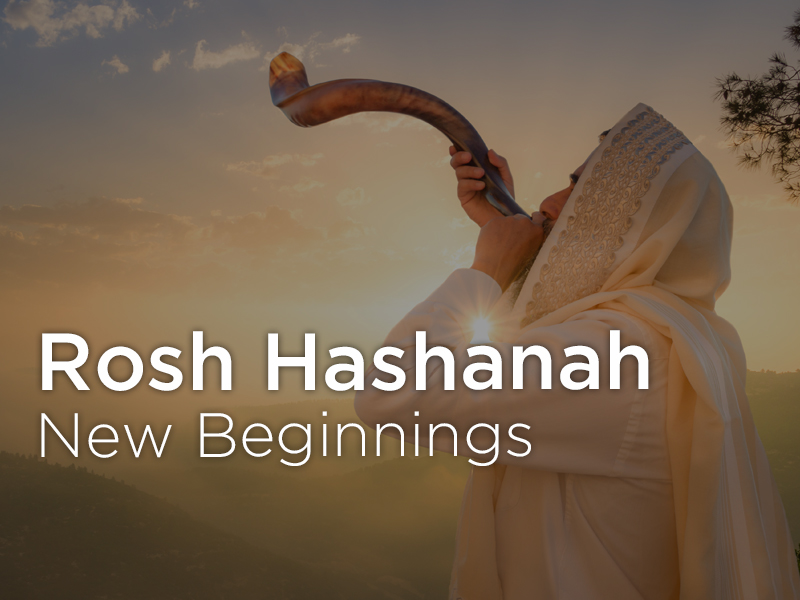
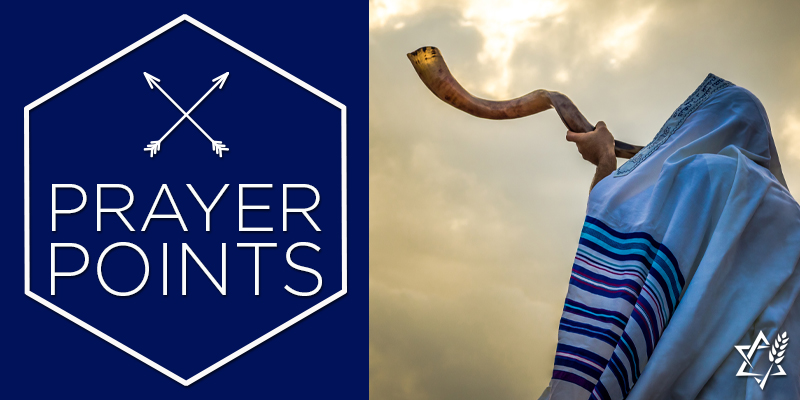
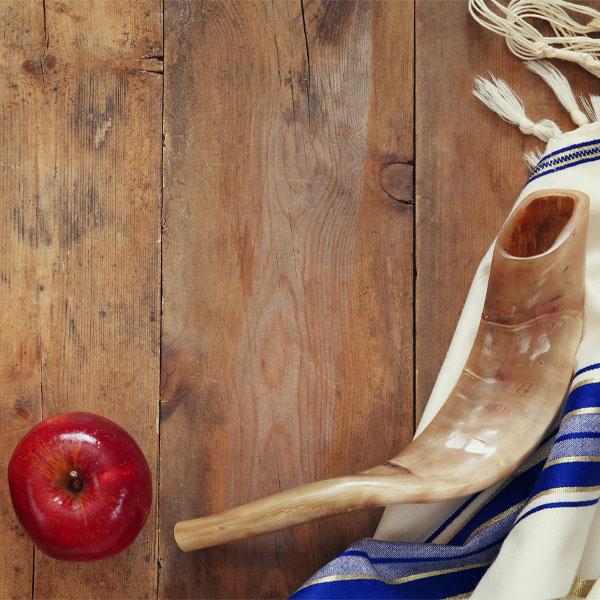
Jewish people celebrate Rosh Hashanah on the same day as the biblical Feast of Trumpets, called Yom Teruah, which means “day of blowing” in Hebrew. The two are celebrated together with synagogue services focused on prayers for good standing with God for the new year along with a day of rest and blowing the shofar as commanded for the Feast of Trumpets (Leviticus 23:23–24). Services include special prayers, blessings and 100 shofar blasts. Apples dipped in honey are a traditional holiday treat, symbolizing the hope of a pleasant new year.

Celebrating the Jewish Feasts connects us to the Jewish roots of our faith in Jesus in a significant way. As Believers, we recognize that by Yeshua’s sacrificial gift on our behalf and through our faith in Him (Ephesians 2:8), God has sealed us forever with the gift of the Holy Spirit. We are guaranteed God’s favor for eternity (2 Corinthians 1:22, Ephesians 4:30).

Understanding our Jewish roots of faith reveals another one of God’s marvels. He commanded that Israel observe His holy appointed times as a vital practice of their faith in Him. He also placed within each of these holy times a prophetic picture of what He would do in the future as His redemptive plan unfolded through the Messiah Yeshua.

The foreshadows of the three Spring Feasts – Passover, First Fruits and the Feast of Weeks – have come to pass with Yeshua’s (Jesus’) death, resurrection and the giving of the Holy Spirit. The prophetic pictures of the Fall Feasts are yet to come.

The Bible says little about the Feast of Yom Teruah, but with the emphasis on blowing the shofar, the biblical trumpet, we can easily see an End-Time correlation to the prophesied last trumpet call (1 Corinthians 15:51–52). Yom Teruah is often associated with the initiation of the Messianic Age and the resurrection of the dead in Messiah.

As we celebrate Rosh Hashanah and reflect on the Feast of Yom Teruah, we realize what a gift God has given us through His Word and the various aspects of His covenant relationship with Israel. Looking at the Jewish roots of our faith in Messiah Yeshua, we can worship God with fresh eyes and renewed wonder at His consistent message of redemption throughout the whole Bible.

Rosh Hashanah – New Beginnings

September 18, 2020
Rosh Hashanah

The New Year is like a reset button. It’s a specific day when you can start fresh with renewed commitment and energy toward goals and dreams. The practice of making New Year’s resolutions has been around for thousands of years. Some of the most common ones have to do with losing weight, exercising more, saving money, breaking bad habits and learning something new.

Annual inventories

Each day is a new beginning, yet, we can easily get lost in its ordinariness and lose sight of this gift. So, when the calendar marks a new year, it’s a perfect time to take stock by reflecting on the previous 12 months and recommitting to good things for the coming year.

January 1 rings in a new year on the Gregorian calendar and is the time when most people make goals for the year ahead. Birthdays are another annual marker. Thoughts of turning a year older prompt many people to do this same kind of self-evaluation around their birthday. Then, there’s Rosh Hashanah, the Jewish New Year that kicks off the Fall Feasts of the Jewish calendar and serves as a season of reflection and repentance.

Within one 12-month period, we have three compelling opportunities to conduct an annual inventory of our lives. What do we do? Should we use the same list three times a year? That seems a bit repetitive. Do we pick one annual marker and overlook the others? Our lives are full, so that makes for a lot to ponder all at once. What if we divided up our life areas and focused on different aspects at each of these annual milestones?

Divide and conquer

For example, at the Gregorian New Year, January 1, we could evaluate our lives and make goals pertaining to family, health and work. On our birthday, we can consider more personal aspirations related to relationships, rest, hobbies, and things that refresh us. On Rosh Hashanah, we focus on our spiritual lives.

Rosh Hashanah

That’s what the Jewish New Year is all about – checking in with God for an inventory of our faith and faithfulness.

Beginning 30 days before Rosh Hashanah, Jewish people focus their attention on reflection and repentance, examining where they have gone astray and things from which they need to turn. We can do the same, making this time of year our season of spiritual renewal, our opportunity for a new beginning.

Intentional time

We all have problem areas in our spiritual lives. We know what those are. We also have ways we’ve turned from God to follow after other things, some of which we may not even realize. As we spend intentional time with the Lord around Rosh Hashanah, opening our hearts to hear Him address those things, we will hear Him calling us to return to Him.

That’s what the word “repentance” means – return. It’s turning from the wrong back to the right, from the harmful to the helpful. It’s turning back to God Himself and all of His goodness given to us in the form of how He wants us to live.

Reflecting

So, let’s get quiet before Him and listen at Rosh Hashanah. Here are some questions and prayers to consider during your time of reflection:

  • What do You want to say to me, Lord?
  • What do You want to bring to my attention?
  • Open my ears to hear You. Speak to me now and throughout each day of this reflecting season
  • Open my eyes to see where I have not trusted You, Lord
  • Show me where I have turned from You and relied on false things
  • Speak to me about my difficulty with __________
  • Show me more deeply why I struggle with ­­­­­­­­­­­­­­­_________
  • Is there a specific word, verse or call to obedience that You want me to focus on for the next year?

Repenting, Returning

As your thoughts shift to repentance, talk with God about what He would have you do:

  • What do You want me to do about ___________, Lord?

  • Lord, help me to turn from ___________ and come fully back to You, without resistance and with a trusting, grateful heart
  • Do You want me to make amends with anyone? If so, who and how?
  • What can I do to help keep me focused on what You have called me to this next year?

Let’s take advantage of the fact that every day offers us a fresh start. As we step into another year, let’s also spend intentional time going deeper with God about the state of our faith. In all the ways that you find you’ve turned away, both big and small, may you return to Him with your whole heart for an exciting new beginning.

Rosh Hashanah is a wake-up call

September 09, 2020
Rosh Hashanah

As Jonathan Bernis recently wrote, Rosh Hashanah is a wake-up call leading us into the Fall Feasts. Not only is this season a significant opportunity for our own self-reflection, but it is also a time of deep introspection and weighty significance for Jewish people around the world. To Messianic Believers and many Christians, the Fall Feasts also point prophetically to Yeshua (Jesus), His second coming, and Him truly “tabernacling” – or dwelling – with His people forever.

We are in the Hebrew month of Elul, which is the season of teshuvah (return). It precedes the High Holy Days of the fall: Yom Teruah (Rosh Hashanah or the Feast of Trumpets), Yom Kippur (the Day of Atonement) and Sukkot (the Feast of Booths or Tabernacles). Let’s pray for the Jewish people now during this season of returning to God and on through the upcoming Fall Feasts. Our desire is that this season and its themes would reveal Jesus as the ultimate source of redemption and a relationship with God.

Let’s pray:

  • As Jewish people draw near to God during this season of teshuvah, they would experience the reality of Him drawing near to them
  • Amid this time of self-reflection and introspection leading up to Yom Kippur, they would see their need for righteousness beyond their own
  • A revelation of God’s holiness, as well as His kindness, would lead them to repentance
  • As they reflect on God’s 13 attributes especially on Erev Rosh Hashanah (the evening when Rosh Hashanah begins) and Yom Kippur, they would encounter Him as the God of compassion, loving kindness, mercy and forgiveness (Exodus 34:6-7a)
  • The true covering (the kippah – as in Yom Kippur) for sin would become apparent and received by Jewish people: complete atonement through Yeshua the Messiah
  • Through receiving the salvation and righteousness provided by God in Jesus, Jewish people around the world would know that their names are written in the Lamb’s book of Life

These fall holy days are introduced in Scripture as the Lord’s annual invitations to sacred practice and reflection with Him. Beyond the ongoing annual observances, they each point to God’s redemptive plans as perfected in Yeshua and ultimately fulfilled in the Last Days upon His glorious return, when He will dwell with His people forever. Amid today’s global uncertainties, unrest and speculation about what the future holds, the Fall Feasts point to the faithful God of Abraham, Isaac and Jacob, who watches over His people and the world. He provides fulfillment of all His promises through Yeshua – Messiah, Savior and King.

Let’s pray:

Father, Thank You for this season of teshuvah and the Fall Feasts. You have laid the foundation for redemption for every Jewish person who turns to You in these weeks leading to Yom Kippur. Your heart, as well as Your promises and provision through Jesus, are available to all who turn to You and call on You. As Jewish people seek to understand themselves more and know You better during these Feasts, bring them into saving knowledge of Yeshua. In Jesus’ name, Amen.

It's here!

September 08, 2020

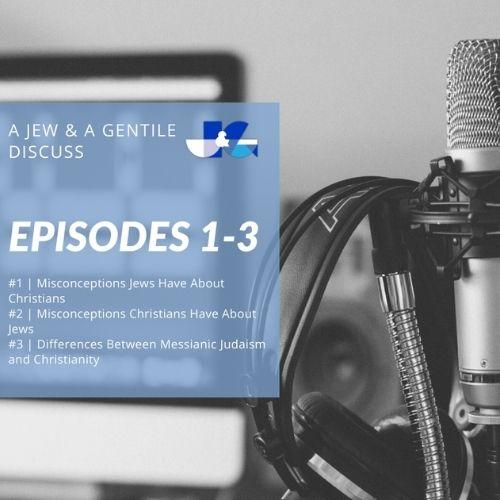
A Jew & A Gentile Discuss Has Launched!

We’re so excited to announce that our brand-new podcast


You won’t hear a podcast like this anywhere else!

Join Ezra Benjamin and Carly Berna, from the Jewish Voice team, as they explore life, faith and current events from a biblical viewpoint – each bringing to the table a different religious background and perspective – one Jewish, one Gentile.

Listen Today!

We’ve posted an introduction plus the first three episodes for you. Hear how Ezra and Carly:

  • Put each on the hot seat to grapple with preconceived notions that Jewish people and Christians have about each other
  • Unpack the differences between Messianic Judaism and Christianity – including identifying the strangest thing one is likely to encounter when going to a typical congregation of the other’s

We told you it was going to be a great podcast!

New Episodes Every Tuesday

Join us each week for new, refreshingly honest conversations between “A Jew & A Gentile.”  New episodes post each Tuesday morning.

Spread the Word!

Tell your family and friends about A Jew & A Gentile Discuss! Share on your social media platforms so others can join in!

arrow-up icon