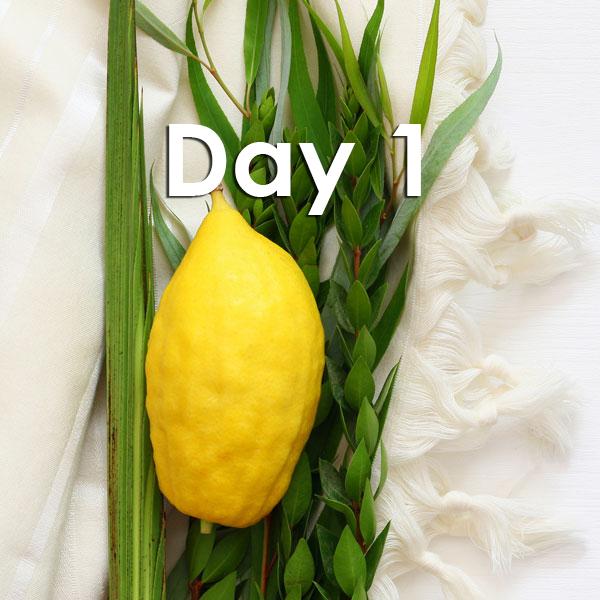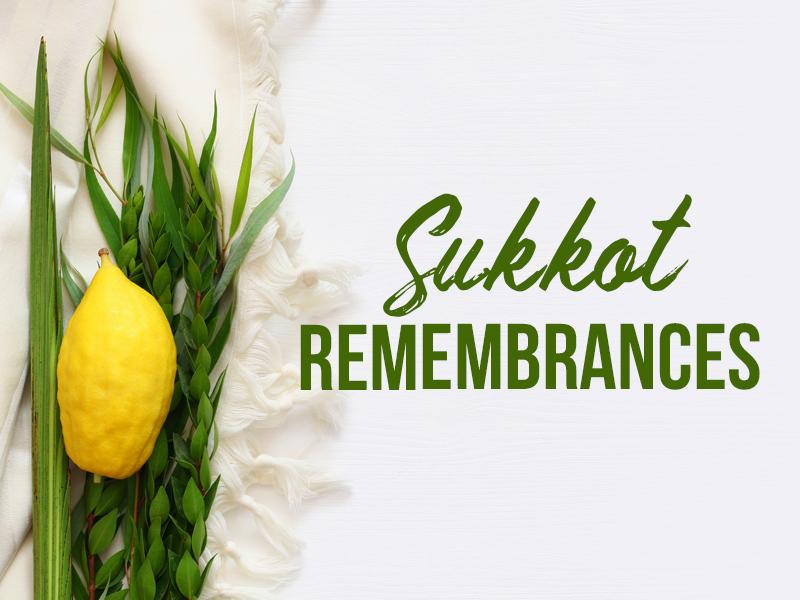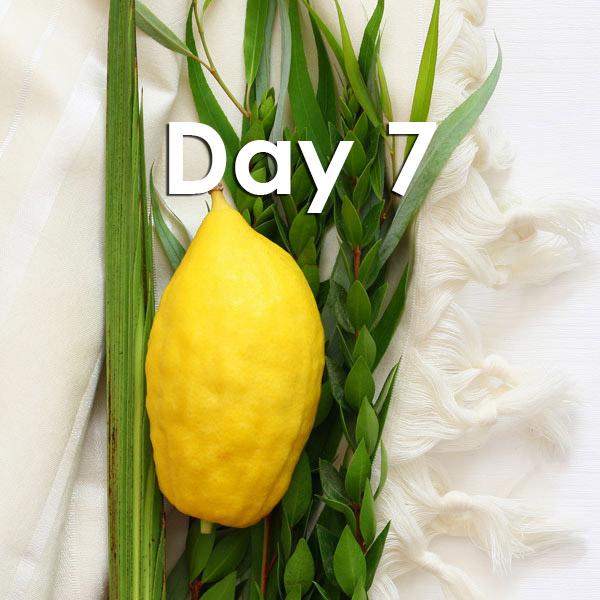
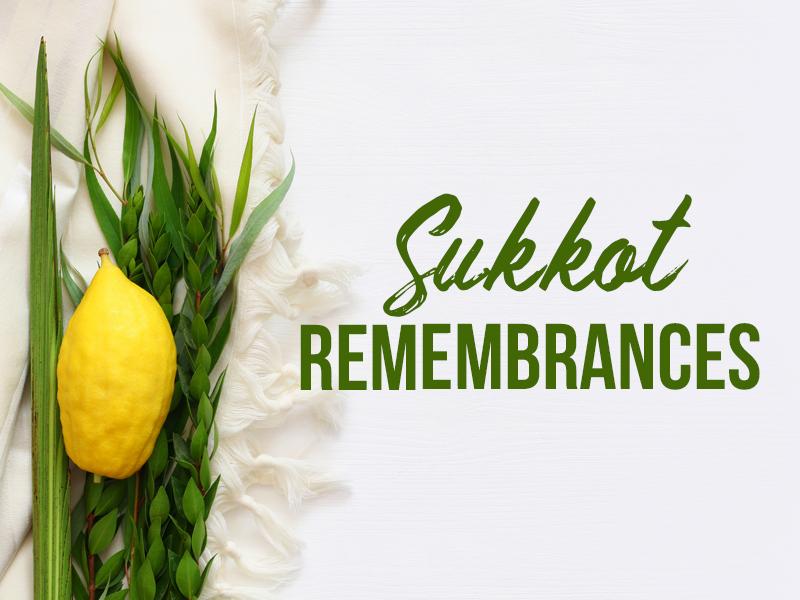
Sukkot Remembrances, Day 7

October 16, 2019
sukkot remembrances

Remembering Our Relationship with Him

The booths of Sukkot offer us symbols of the fragility and transient nature of life. Tents are temporary, and so are our earthly lives. 

This physical world is the only one we’ve known, and though we accept that we’ll someday leave it, life-in-the-moment on planet Earth can feel rather sure. But it really isn’t. Our life could end in any given minute. Besides which, this world won’t last. God is preparing to reveal the New Heaven and New Earth, and this creation will be forgotten (Isaiah 65:17).

Our relationship with God, however, is eternal. Life on Earth is just the beginning of what God has in store for His people. The tents of Sukkot remind us that we shouldn’t get too attached to this world, its pleasures and appearance of security – because only spiritual things last.

“For we know that if the tent, our earthly home, is torn down, we have a building from God – a home not made with human hands, eternal in the heavens.” ––2 Corinthians 5:1

This life is preparing us for eternity. Scripture tells us to invest in the eternal over this Earth. This includes investing in our relationships with God by feasting on His Word and basking in His presence through prayer and worship. It means sowing into other people’s lives with His love and wisdom through acts of kindness, caring and ministry. It means using your gifts to help others and so much more. These are the treasures that can’t be taken away from us.

What really matters in this life? What kind of heavenly treasures might God be calling you to pursue today? For the coming year? Is He inviting you to spend more time with Him in His Word? Is He putting it on your heart to be more mindful of opportunities to minister to others? Determine today to heed His call for an eternal mindset.

“Do not store up for yourselves treasures on earth, where moth and rust destroy and where thieves break in and steal. But store up for yourselves treasures in heaven, where neither moth nor rust destroys and where thieves do not break in or steal.” ––Matthew 6:19–20
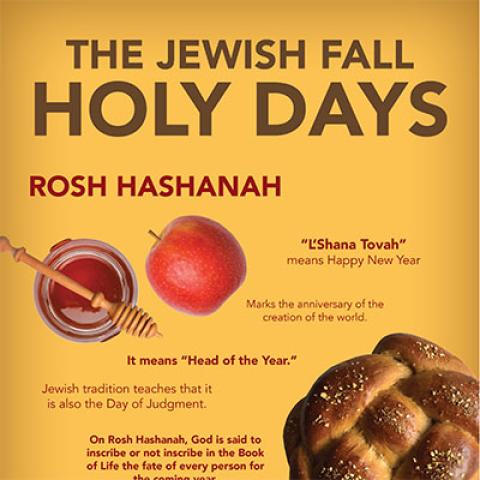
Get the Fall Feasts Infographic

Discover the meaning and wonder of Rosh Hashanah, Yom Kippur, and Sukkot with this specially designed infographic.
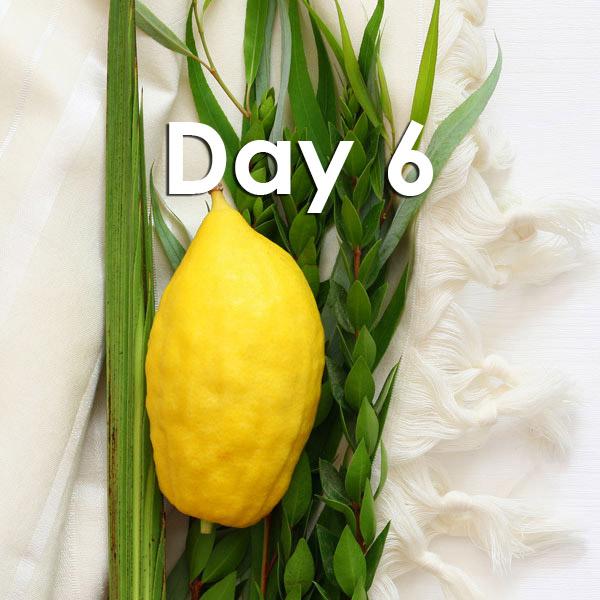
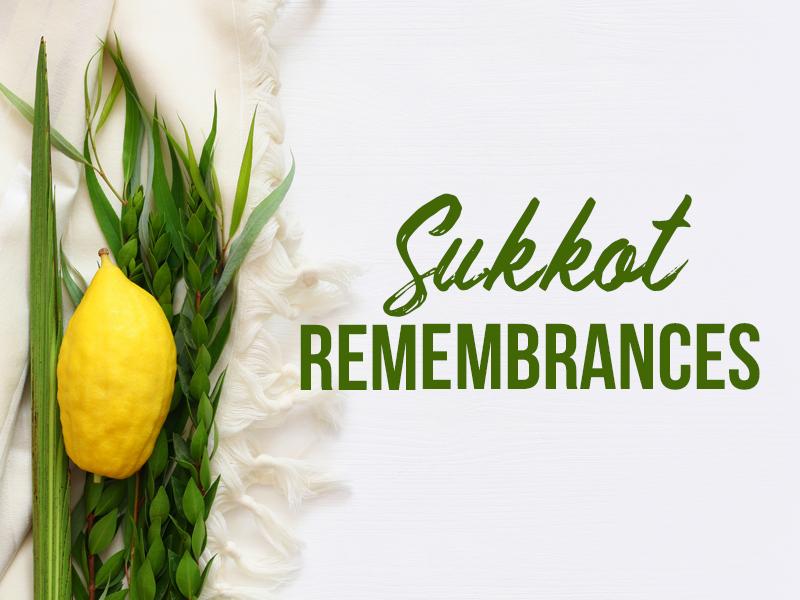
Sukkot Remembrances, Day 6

October 16, 2019
sukkot

Remembering God’s Presence

Remembering Israel’s wilderness days reminds us of how God’s presence dwelled with them during their decades-long wandering. As they roamed the desert, they did so by the guidance of God’s presence represented to them in a pillar of cloud by day and of fire by night. After the tabernacle – a tent – was built, God’s glory resided in the innermost room called the Holy of Holies. 

The booths, or tents, of Sukkot depict God’s desire to live in fellowship with His people. 

Today, His presence lives within those who have placed their faith in Messiah Yeshua (Jesus). God promised through the prophet Jeremiah that one day, He would write His Law on our hearts (Jeremiah 31:31–32), and the New Covenant explains that when we believe in Yeshua, we receive God’s Holy Spirit to live inside us. (See John 16:5–15.) 

“Now it is God who establishes us with you in Messiah. He anointed us, set His seal on us, and gave us the Ruach [Spirit] in our hearts as a pledge.” ––2 Corinthians 1:21–23

It is awe-inspiring to ponder the fact that the holy God of the universe loves us so much that He would want to dwell with us. And through the Holy Spirit, His very presence is within us. He is as close as our silent prayers and always with us. In His presence, all that He is and all that He gives is available to us. By His presence, He comforts and strengthens us. He calms our fears and lifts our spirits. He provides us with a peace that surpasses understanding (Philippians 4:6–7). 

Look back and remember a time when you particularly felt God’s presence and how it helped you. Thank Him for the gift of His never-failing presence.

“Why are you in despair, O my soul? And why have you become disturbed within me? Hope in God, for I shall again praise Him for the help of His presence.” ––Psalm 42:5 (NASB)

Get the Fall Feasts Infographic

Discover the meaning and wonder of Rosh Hashanah, Yom Kippur, and Sukkot with this specially designed infographic.
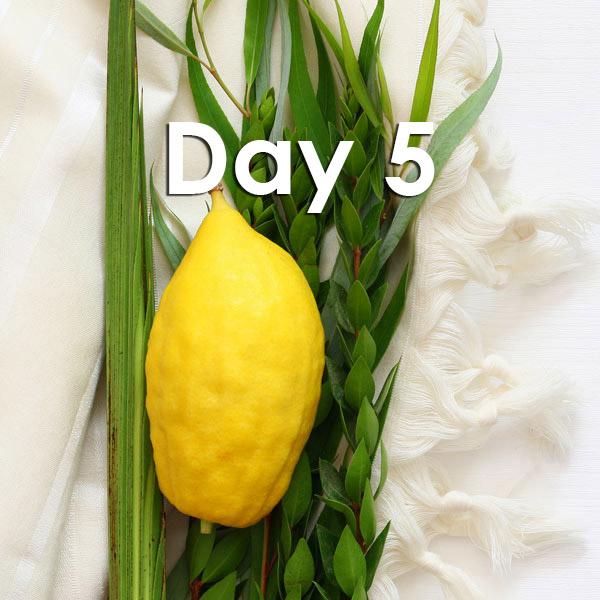
Sukkot Remembrances, Day 5

October 16, 2019

Remembering God’s Divine Protection

The booths that we build today for Sukkot represent the tents that God had the Israelites live in during their 40-year sojourn in the wilderness. Their tents protected them from the elements and serve as reminders of God’s divine protection of us today.

In the Scriptures, God is shown to be our protector. He has been faithful to Israel throughout history when time and time again, enemies have attempted to annihilate her. She is still here, regathered into the Land God promised to Abraham thousands of years ago. He has supernaturally preserved the Nation of His people against all earthly odds. He said that Israel would always be, and He is true to His Word.

“This is what the Lord says, He who appoints the sun to shine by day, who decrees the moon and stars to shine by night, who stirs up the sea so that its waves roar – the Lord Almighty is His name: ‘Only if these decrees vanish from My sight,’ declares the Lord, ‘will Israel ever cease being a nation before Me.’” ––Jeremiah 31:35–36 (NIV)

This same God is protecting us today. The Psalms are filled with descriptive words revealing God’s protection. He is called a shield, fortress, stronghold, strong tower and more. (See Psalms 3:4, 62:3, 28:8 and 59:10.) The psalmists ran to Him for protection and comfort. In remembering Him, they found strength. No matter how severe a storm we’re going through, we can know God loves us and is ready to receive us into the shelter of His care.

How do God’s faithfulness and comfort strengthen you when you’re facing life’s challenges? Do you find Him to be your “strong tower”? If not, ask Him to help you know the “hiding place” of His love and protection.

“You are my hiding place – You will protect me from distress. You surround me with songs of deliverance.”  ––Psalm 32:7

Get the Fall Feasts Infographic

Discover the meaning and wonder of Rosh Hashanah, Yom Kippur, and Sukkot with this specially designed infographic.

Sukkot Remembrances, Day 3

October 15, 2019

Remembering God’s Provision

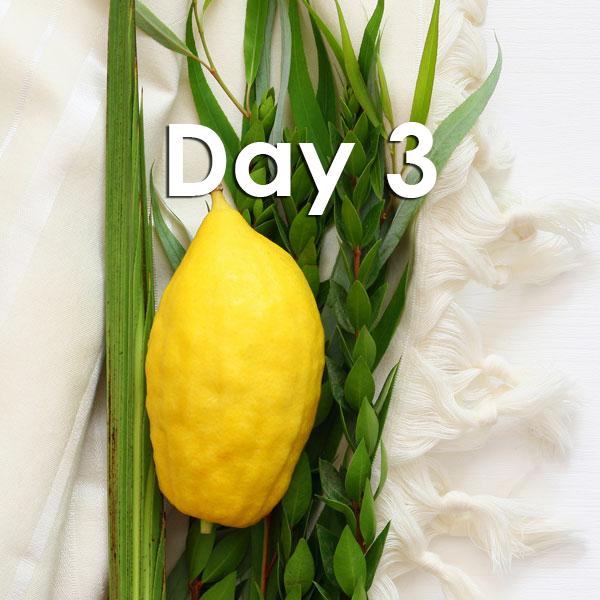
God instructs us at Sukkot to remember that He made the Israelites live in tents in the wilderness. Their wandering experience was more complicated than merely living in temporary housing as they traveled. The barren desert offered no food or water for them. They could not have survived it without God’s supernatural provision.

He supplied food out of nowhere with a fresh crop of manna each morning, giving the Children of Israel one day’s nourishment at a time. He provided water from dry rocks to quench their thirst and sustain their lives. He even prevented their clothing and shoes from wearing out despite decades of use. God met their essential needs for 40 years. In remembering this during Sukkot, we celebrate God’s provision for the Israelites of ancient days as well as the ways He takes care of us today.

His divine power has given us everything we need for life and godliness, through knowledge of Him who called us by His own glory and virtue. ––2 Peter 1:3

Many graces of provision go nearly unnoticed in our lives because they are so consistently delivered. We consider many to be guaranteed givens – food, water and clothing among them. The temporary structures of Sukkot remind us what a gift these are. To stop and number our blessings of God’s provision beyond these quickly becomes a list so long we can’t keep track.  

As you enjoy this Feast of Sukkot, take time to sit quietly before the Lord. Recount some of the essential gifts He has provided for you. Then, ponder other blessings from His hand that you recognize in your life. Take a few deep and slow breaths, and realize even more graces God has provided for you. And give Him your thanks.

Let us come before His presence with thanksgiving. Let us shout joyfully to Him with songs. ––Psalm 95:2

Get the Fall Feasts Infographic

Discover the meaning and wonder of Rosh Hashanah, Yom Kippur, and Sukkot with this specially designed infographic.
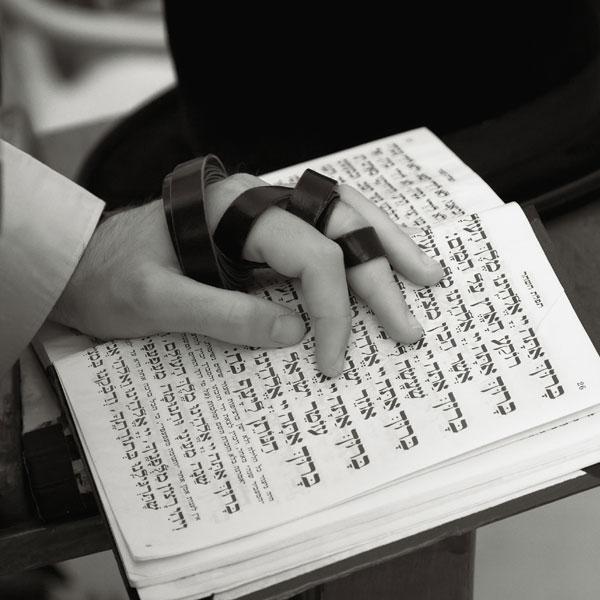
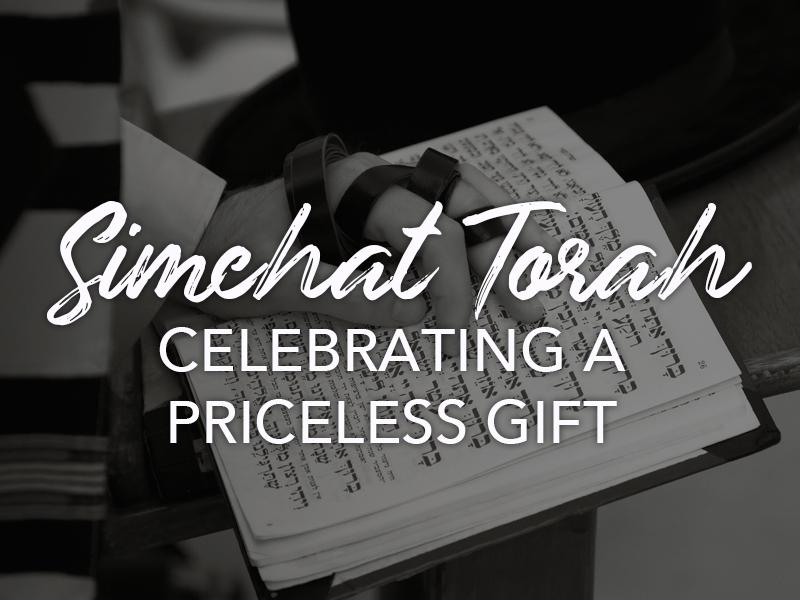
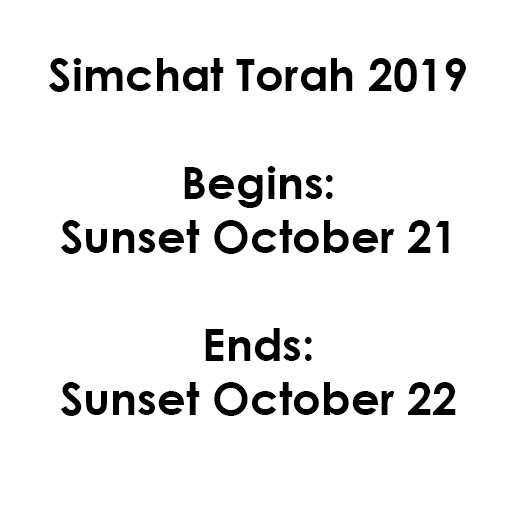
Simchat Torah: Celebrating a Priceless Gift

October 13, 2019
Torah Simchat

God gave Israel the Feasts to remember historical events, and He explained how to commemorate them before Him. Jewish people say a blessing that honors and thanks God for new things or when they do something for the first time in a new year.

They bless God for their waking in the morning and again at night for Him seeing them through the day. And, they have a day set aside to intentionally celebrate God’s Word.

 Simchat Torah (SIM-khat TOR-ah) means “Joy of the Torah.” Speaking precisely, the Torah is the first five books of the Bible: Genesis, Exodus, Leviticus, Numbers and Deuteronomy. These books, written by Moses, are also known as the Pentateuch. 

The word Torah means “instruction,” and Jewish people also use it in reference to the remainder of Holy Scriptures in the Tanakh (TAH-nahk) or Old Covenant. Messianic Jews understand that God’s instruction encompasses the New Covenant Scriptures as well, and is personified in Yeshua (Jesus) Himself (Hebrews 1:1‒2), who is the Word made flesh (John 1:14).

Each week throughout the year, Jewish people around the world read a weekly Scripture portion from the Torah. This parasha (par-a-SHAH) unites them together as they each read the selected passages, week-by-week, from Genesis through Deuteronomy. 

Simchat TorahSimchat Torah marks the completion of these annual Torah readings. During the morning service of Simchat Torah, worshipers read the last parasha of the year in Deuteronomy. In the evening, the yearly cycle begins again with the first reading from Genesis. Synagogue services on Simchat Torah include festive dancing and singing while as many people as possible take turns carrying the Torah scroll around the synagogue or public squares. 

A Torah scroll is a literal scroll. To make one, a scribe writes out the five books – using all kosher elements – on between 62 and 84 large sheets of parchment that then get stitched together horizontally into a continuous scroll.  Each end is attached to a spindle and rolled toward the center until they meet. By rolling and unrolling one side or the other, we can read the entire Torah. 

A Torah scroll is a cherished possession of synagogues and families. In 1949, the fledgling State of Israel rescued about 50,000 Jewish people from violent persecution in Yemen. The secret mission, called Operation Magic Carpet, transported Yemenite Jews to Israel by way of 380 airlifts. The people had to travel, mostly on foot, from their rural homes to central camps where they waited for flights. They could take from their homes only what they could carry. Many of them sacrificed other possessions to bring their Torah scrolls. 

God’s Word is a precious gift to us. Through it, the God of the universe speaks to us. He reveals who He is and reaches out to offer a relationship with Him. His Word teaches and corrects us. It restores, trains and equips us.

“All Scripture is inspired by God and useful for teaching, for reproof, for restoration, and for training in righteousness, so that the person belonging to God may be capable, fully equipped for every good deed.”

―2 Timothy 3:16–17

God’s Word shows us His holiness and love. It is alive with His Spirit and able to interact with our hearts and minds to shape us into the image of His Son. 

“For the word of God is living and active and sharper than any two-edged sword piercing right through to a separation of soul and spirit, joints and marrow, and able to judge the thoughts and intentions of the heart.”

―Hebrews 4:12

Simchat Torah celebrates this fantastic, life-giving communication of God to us. Take some time on this special holiday to rejoice in the gift of God’s Word. 

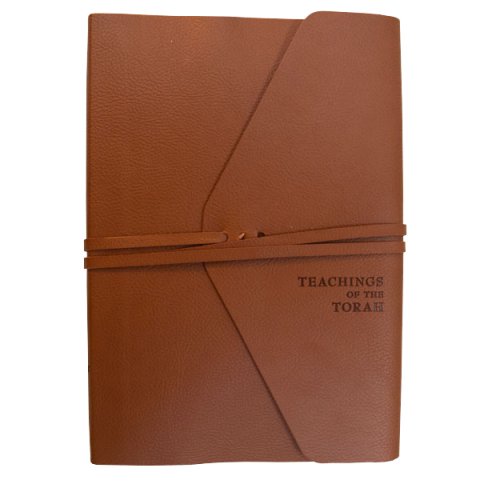
Get the "Teachings of the Torah" 

Study the Torah the first five books of the Bible through the eyes of a first-century disciple. “Teachings of the Torah” invites you into the questions, stories, and interpretations that prove the Bible is a living book.

Sukkot Remembrances, Day 1

October 13, 2019
banner

Rabbis teach that at Sukkot, we recount four things: that God is a God of remembrance, deliverance, holiness and provision. There are three more that, as Messianic Jewish Believers, we find appropriate to celebrate during the Feast of Sukkot: God’s protection, His presence, and our relationship with Him. Join us each day of Sukkot for another devotion focusing on one of these remembrances.

Our God of Remembrance

God knows us. He knows how forgetful we are. Thus, He established certain Feasts as remembrances to ensure that we would not forget what He has brought us out of and the things He has done for us. Sukkot is one of those Feasts.

Sukkot is a time to remember with joy – God actually commands it (Deuteronomy 16:14). This joy springs from the intentional act of remembering. The Psalmists often practiced this spiritual discipline, recounting Israel’s history and the many ways God intervened on their behalf. They took the time to write and recite the God-stories of Passover, the Exodus and the wilderness. In revisiting the miracles God performed and past examples of His power and faithfulness, these writers found comfort and peace for what they faced in their present circumstances. And they passed on the encouragement to generations after them.

“I will remember the works of the Lord; surely I will remember Your wonders of old. I will also meditate on all Your work, and talk of Your deeds.”  ––Psalm77:11–12 (NKJV)

The practice of remembrance blesses us. It imparts strength and inspires us to share with others about our great God. We receive comfort, and God receives glory, drawing others to Him.

What are some of the God-stories in your life that you need to remember today? Thank Him for them, and consider sharing His wonders with others so they too will be uplifted by God’s goodness. 

He has made His wonderful works to be remembered; the Lord is gracious and full of compassion. ––Psalm 111:4 (NKVJ)

Get the Fall Feasts Infographic

Discover the meaning and wonder of Rosh Hashanah, Yom Kippur, and Sukkot with this specially designed infographic.
arrow-up icon