Beyond the Broadcast: Our Bold New Season Begins. Watch Now ->
Beyond the Broadcast: Our Bold New Season Begins. Watch Now ->

They bless God for their waking in the morning and again at night for Him seeing them through the day. And, they have a day set aside to intentionally celebrate God’s Word.
Simchat Torah (SIM-khat TOR-ah) means “Joy of the Torah.” Speaking precisely, the Torah is the first five books of the Bible: Genesis, Exodus, Leviticus, Numbers and Deuteronomy. These books, written by Moses, are also known as the Pentateuch.
The word Torah means “instruction,” and Jewish people also use it in reference to the remainder of Holy Scriptures in the Tanakh (TAH-nahk) or Old Covenant. Messianic Jews understand that God’s instruction encompasses the New Covenant Scriptures as well, and is personified in Yeshua (Jesus) Himself (Hebrews 1:1‒2), who is the Word made flesh (John 1:14).
Each week throughout the year, Jewish people around the world read a weekly Scripture portion from the Torah. This parasha (par-a-SHAH) unites them together as they each read the selected passages, week-by-week, from Genesis through Deuteronomy.
Simchat Torah marks the completion of these annual Torah readings. During the morning service of Simchat Torah, worshipers read the last parasha of the year in Deuteronomy. In the evening, the yearly cycle begins again with the first reading from Genesis. Synagogue services on Simchat Torah include festive dancing and singing while as many people as possible take turns carrying the Torah scroll around the synagogue or public squares.
A Torah scroll is a literal scroll. To make one, a scribe writes out the five books – using all kosher elements – on between 62 and 84 large sheets of parchment that then get stitched together horizontally into a continuous scroll. Each end is attached to a spindle and rolled toward the center until they meet. By rolling and unrolling one side or the other, we can read the entire Torah.
A Torah scroll is a cherished possession of synagogues and families. In 1949, the fledgling State of Israel rescued about 50,000 Jewish people from violent persecution in Yemen. The secret mission, called Operation Magic Carpet, transported Yemenite Jews to Israel by way of 380 airlifts. The people had to travel, mostly on foot, from their rural homes to central camps where they waited for flights. They could take from their homes only what they could carry. Many of them sacrificed other possessions to bring their Torah scrolls.
God’s Word is a precious gift to us. Through it, the God of the universe speaks to us. He reveals who He is and reaches out to offer a relationship with Him. His Word teaches and corrects us. It restores, trains and equips us.
“All Scripture is inspired by God and useful for teaching, for reproof, for restoration, and for training in righteousness, so that the person belonging to God may be capable, fully equipped for every good deed.”
―2 Timothy 3:16–17
God’s Word shows us His holiness and love. It is alive with His Spirit and able to interact with our hearts and minds to shape us into the image of His Son.
“For the word of God is living and active and sharper than any two-edged sword – piercing right through to a separation of soul and spirit, joints and marrow, and able to judge the thoughts and intentions of the heart.”
―Hebrews 4:12
Simchat Torah celebrates this fantastic, life-giving communication of God to us. Take some time on this special holiday to rejoice in the gift of God’s Word.



A biblical look at the why, what, when, and how of thankfulness.

Pray for two locally-led outreaches this month: Ethiopia's Beta Avraham congregation serving the Kechene Jewish community and Zimbabwe's first Lemba-run medical clinic.

Prayer points for the Jewish people during a week of mixed emotions: remembering the October 7 Hamas attack anniversary and celebrating Simchat Torah.

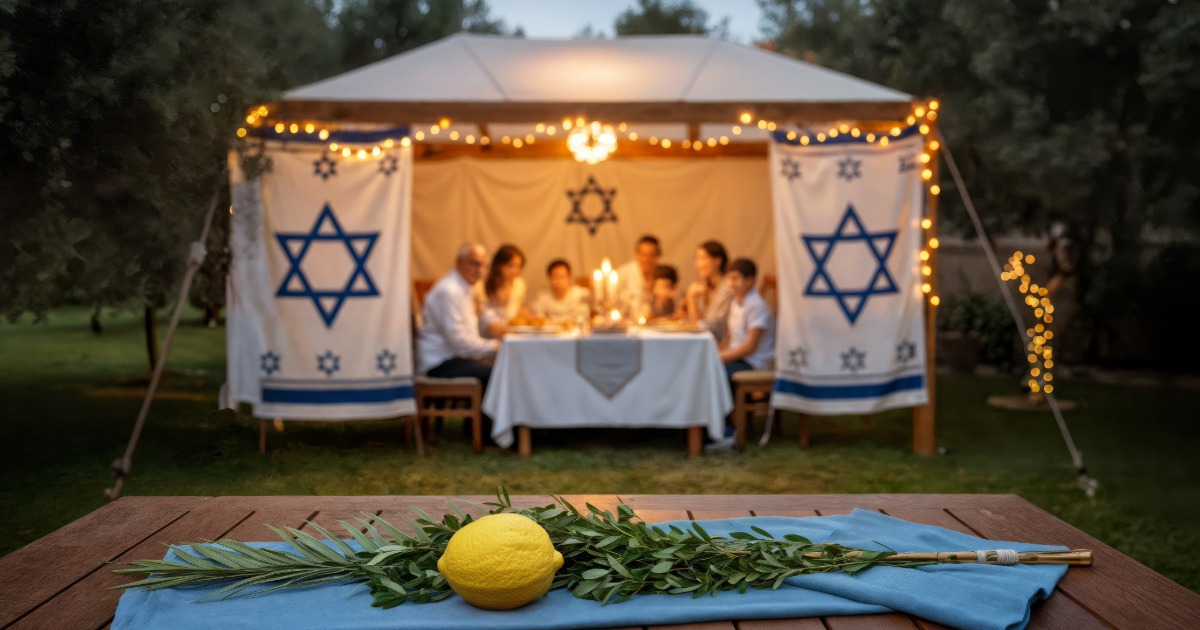
The seven-day Feast of Sukkot is one of the most unusual holidays God established for Israel to observe. In this article, we explain the various observances God commanded for Sukkot and the invitation He includes by adding instructions for an eighth day, which is known as Shemini Atzeret.