It may sound like an obscure little holiday to Gentile Believers, but Tu B’Shevat holds significant meaning for Jewish people. Tu B’Shevat is the Jewish New Year for Trees. Its literal meaning is “the 15th of Shevat,” indicating a date on the Jewish calendar. The month of Shevat falls in late January or early February on the Gregorian calendar.
This New Year for Trees is rooted in the Torah’s command not to eat fruit from a new tree for three years (Leviticus 19:23). To observe this commandment faithfully, ancient rabbis set Tu B’Shevat to mark the “birthday” for all trees. Tu B’Shevat became a holiday after a Jewish teacher in the early 1890s took his students on a tree-planting excursion in Israel. At that time, the Land wasn’t called Israel but was part of the Ottoman Empire. The practice of planting trees on this date caught on and became an annual tradition among many groups, as it remains today.
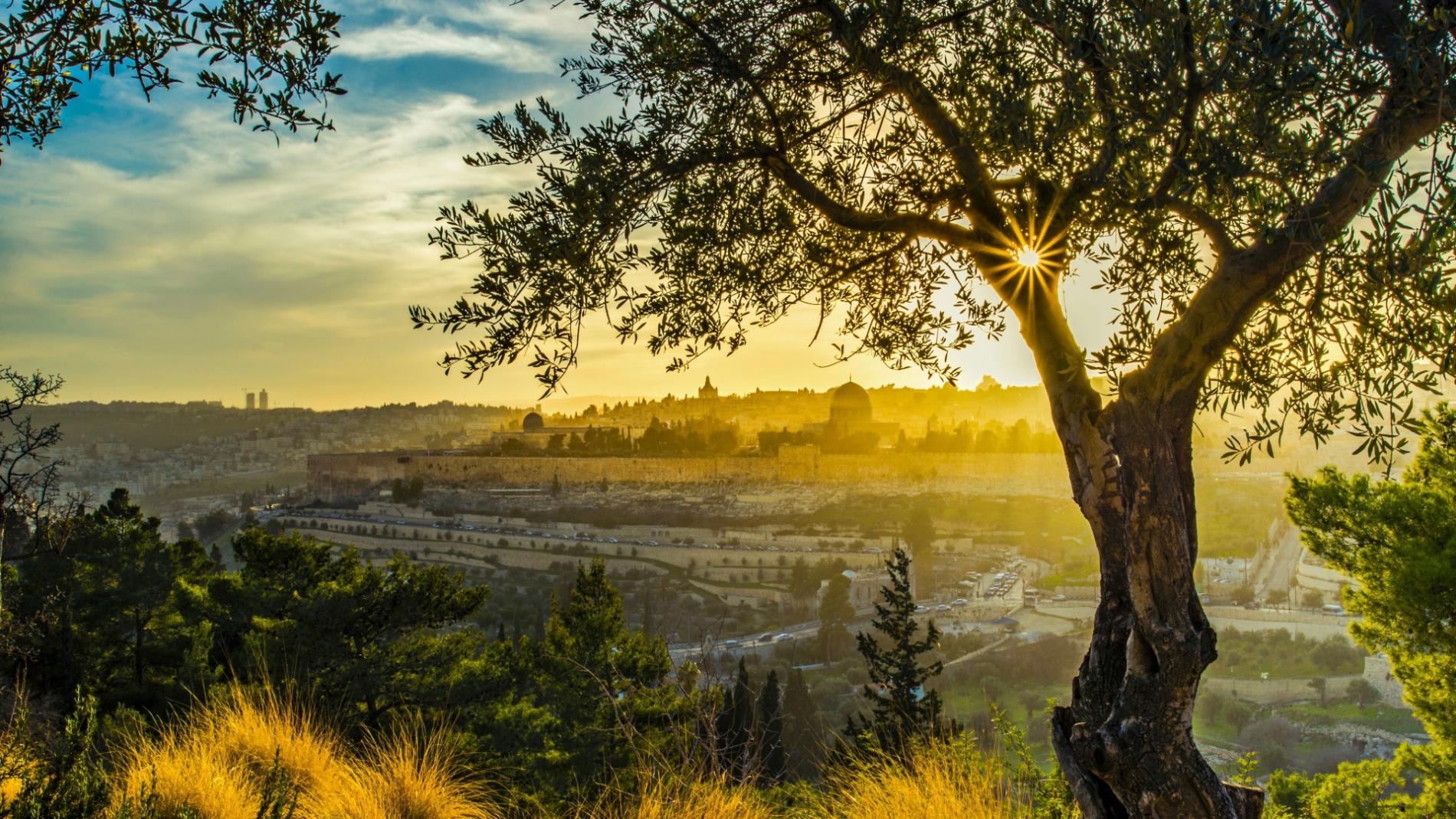
Planting trees in Israel for Tu B’Shevat reinforces our connection to the Land, whether we live in Israel or in the Diaspora. Jewish people worldwide send donations to organizations that plant trees in the Land, beautifying it and increasing Israel’s fruitfulness. The prophet Ezekiel foretold that Israel’s desolate land would become lush again, and that is the case since Israel’s rebirth as a country in 1948. (See Ezekiel 36:34–36.)
Trees, in general, symbolize life, strength, and abundance. But what does the Bible say about trees? Looking at trees in Scripture, we see specific trees and their usefulness. We also see trees used as metaphors, in worship, parables, and prophecy. Join us as we explore trees in the Bible, and discover their spiritual significance for your own life.
Trees at the Beginning
The Garden of Eden contained many trees, but two stood out for their significance. The Tree of the Knowledge of Good and Evil was the one tree God forbade Adam and Eve to eat from. He said it would bring death. Satan deceived Eve, telling her God lied about the tree and its fruit wouldn’t harm her, but would actually do her good. Eve ate. Adam ate. And sin entered all mankind – from then to now to the end of the age. There was another tree in the Garden, one that promised life rather than death. Lest Adam and Eve eat from this Tree of Life and live forever in their fallen state, God expelled them from the Garden.
References: Genesis 2:9, 3:22–24.
Uses of Trees in the Bible
Food
God created fruit-bearing trees to provide food for mankind.
References: Genesis 1:11–12, 1:29, Deuteronomy 20:19.
Building
Trees provide wood for building things. We can assume that early tent dwellings used branches as poles to support the coverings. Noah’s ark was made of gopher wood. The Ark of the Covenant was made of acacia wood, covered in a gold overlay. Specific trees are mentioned as being used to build King David’s house and the First Temple.
References: Exodus 25:10, 2 Samuel 5:11, 1 Kings 6, Isaiah 60:13.
Fire
Without explicitly saying it until Psalm 120, it’s a given that tree wood was used to make fires throughout biblical history. Firewood enabled cooking and provided warmth.
References: Genesis 19:3, Exodus 12:8, Psalm 120:4, Proverbs 26:20, Mark 14:54.
Homes for Birds
The birds of the Earth find their rest, their home, and their nesting places among the trees.
References: Psalm 104:17, Matthew 13:31–32.
Beauty
Beauty is part of God’s nature, and He loves to make things beautiful. Trees beautify the Earth He gave for us to dwell in.
Reference: Leviticus 23:40, Ezekiel 31:19.
Shade, Rest, and Hospitality
Trees provide shade, offering a comfortable place to find rest or practice hospitality by entertaining guests.
References: Genesis 18:4, Zechariah 3:10.
Worship & Offerings
Wood was used to make burnt offerings to the Lord, even before the Tabernacle. Noah offered a burnt offering after the flood. God tested Abraham by asking him to make a burnt offering of his own son, Isaac, stopping him at the last moment and providing a ram instead. In the wilderness, one of the freewill offerings the Israelites made toward building the Tabernacle was acacia wood. God instructed the Israelites to bundle branches from three species of trees as part of worship during the Feast of Tabernacles (Sukkot). At Yeshua’s (Jesus’) “Triumphal Entry” into Jerusalem days before His crucifixion, worshipers laid tree branches in the road before Him and shouted “Hosanna! Blessed is He who comes in the name of the Lord!”
References: Genesis 8:20, 22:2–14; Exodus 29, Exodus 25:1–8, Leviticus 1, 23:40, Mark 11:8.
Idolatry
Trees were also used for idol worship. Israel and Judah set up altars on “high places” under trees where they made sacrifices in disobedience to God. Tree wood was also used to carve idols, which God explicitly forbade in the second commandment.
References: 1 Kings 14:22–23, Isaiah 44:14–20, and Exodus 20:4.
God’s Blessing & Judgment
God used trees and their fruitfulness as ways to communicate His pleasure with or judgment on His people or other nations. During times of blessing, trees bore bountiful fruit. In times of judgment, God struck trees with barrenness or brought plagues to destroy them. One of His Last Days’ judgments on the Earth will be that one-third of the Earth’s trees will be burned up.
References: Ezekiel 34:27, 36:30, Exodus 9:5, 10:5, Leviticus 26:20, Jeremiah 7:20, Revelation 8:7.
Execution
Trees were used as instruments of execution – hangings and, in Roman times, crucifixion by “hanging on a tree.” The Roman executioner’s stake that Yeshua died on is also referred to as a tree.
References: Genesis 40:19, Acts 5:30, 10:29, 13:29.
Praise
Scripture speaks about Creation praising and worshiping God. Psalm 148 calls upon the heavens, planets, Earth, and animals to praise the Lord. Other verses directly mention trees praising God, rejoicing, singing, and clapping their hands in response to God’s goodness and deeds.
References: Psalm 96:12, Isaiah 44:23, 55:12.
Miracles
God led the Israelites to freedom into the Sinai Desert, where they soon discovered there was no water. He showed them His power by having Moses throw a tree into the bitter waters of Marah, and they became sweet and fit for drinking. Yeshua cursed a barren fig tree one day, and the next day the disciples passed by it again; it was completely shriveled from the roots up, revealing to them His divine power.
References: Exodus 15:25, Mark 11:20–22.
Prophecy
God used the analogy of a tree to describe a judgment He was going to enact against Egypt. He also used the tree to foretell that His promised Messiah would come from the line of King David, from the tree or trunk of Jesse.
References: Ezekiel 31, Isaiah 11:1.
Metaphors
A Flourishing Life
Wisdom, righteousness, fulfilled desire, and wholesome speech are called “trees of life” for a person.
References: Psalm 92:12, Proverbs 3:18, 11:20, 13:12, 15:4.
Security and Fruitfulness in the Lord
The person who trusts in God is like a tree planted by a rich source of water, having no cause to worry in drought. Likewise, the righteous person will be like a tree planted near rivers, producing bountiful fruit and vibrant leaves.
References: Jeremiah 17:7–8, Psalm 1:3.
Hope for Personal Revival
Job, in his despair, contrasted his life to a cut-down tree, saying that at least the tree has hope of sprouting new shoots of revival.
Reference: Job14:7
The Bible also uses trees to represent such things as long life, Israel’s fathers, Israel’s beauty, a shaking heart, a shaking judgment from God, and countries. God says that He is like a green cypress tree and Israel’s fruit is found in Him.
References: Isaiah 65:22, Hosea 9:10, Hosea 14:6, Isaiah 7:2, Isaiah 34:4, Ezekiel 31:4, Hosea 14:8.
Spiritual Fruit
One of the best-known biblical metaphors involving trees is that of spiritual fruit. Yeshua likens people to trees when saying that a tree is known by its fruit. He contrasts Believers as good trees bearing good fruit with unBelievers as bad trees bearing bad fruit. James addresses unwholesome speech as a fruit from a different kind of tree, a fruit that should not come forth from Believers. The gospel of John describes Jesus as the true vine and Believers as the branches. He explains that the gardener prunes healthy vines (and by implication trees) to help them produce more fruit. Similarly, God uses life’s challenging circumstances to “prune” us, thereby strengthening our faith and producing more fruit that points the world to God. The apostle Paul describes this spiritual fruit as love, joy, peace, patience, kindness, goodness, faithfulness, gentleness, and self-control.
References: Matthew 12:33, Matthew 7:17–18, James 3:8–12, John 15:1–8, Galatians 5:22–23.
Faith
Yeshua compared our faith to a tiny mustard seed. Though it is small, it produces a tree that bears much fruit and blesses other living things. A little faith, He indicated, goes a long way. It can move mountains, work wonders, and glorify Him to the world.
References: Matthew 13:22.
Israel and the Church
One of the most overlooked metaphors among Christians pertains to the Church’s relationship to Israel, the Jewish people. The apostle Paul describes Israel as a natural olive tree and Gentile Believers in Jesus as grafted-in branches from a wild olive tree. He commands the grafted branches not to boast as if they replaced or are better than the natural branches, because the very tree itself is Israel. He goes on to say that God is able to graft back in natural branches that were broken off for unbelief. A few verses later, he reminds the Roman Believers that the gifts and callings of God – in general and specifically to Israel as His covenant people – are irrevocable.
References: Romans 11:16–24, 11:29.
Parable for Identifying Signs of the End Times
Yeshua said no one knows the day or the hour of His return, but He used a parable to teach us how we could know the season. He said we can tell what season it is by how the fig tree looks. When its leaves are new, we know that summer is near. In the same way, when we see the things He described to them about the Last Days, we know His return is near.
Reference: Matthew 24.
A Tree at the End
The Tree of Life appears again in the book of Revelation. The angel to the Church of Ephesus received the Lord’s word that to those who overcome, the Lord will allow to eat from the Tree of Life in “the Paradise of God,” in the New Jerusalem. This exquisite tree will reside on either side of the “river of water of life” flowing out of the Temple, and will bear 12 different fruits, yielding fruit every month. Its leaves will be for the healing of the nations. The Tree of Life is part of the glorious future that awaits Believers in Yeshua.
References: Revelation 2:7, 22:2, 14.
From the beginning to the end, the Bible is filled with references to trees. This makes the Jewish holiday of Tu B’Shevat – the New Year for Trees – even more significant. So, the next time you’re outside, take a moment to enjoy the beautiful trees around you and reflect on how God speaks to you through His marvelous Creation – from Genesis to Revelation.