Beyond the Broadcast: Our Bold New Season Begins. Watch Now ->
Beyond the Broadcast: Our Bold New Season Begins. Watch Now ->

My dear brothers and sisters in Ukraine, I can't tell you how much I wish I could be with you today. I love you so much, I pray for you often, and I miss you. I know that many of you have endured unimaginable hardship, and my heart goes out to you. Although I cannot be there in person, I want to share something the Lord has been impressing upon my heart, something I believe is especially important for the times we are living in.
There is a shaking going on in our world once again, and it's radically changing everything around us. History is filled with periods of shaking – wars, famines, plagues, natural disasters. They've come, and they've gone. But in my lifetime, I don't remember a period quite like the past five years. We've experienced a global pandemic, the devastating invasion of Ukraine, economic upheaval, and wars that threaten to draw entire regions into conflict. The world seems increasingly uncertain, and the relative stability many of us once took for granted is disappearing.
I grew up during the Cold War. I remember as a child having drills where we were told to get under our desks in case missiles were launched from Moscow or somewhere in the Soviet Union. Looking back, I don't know what good hiding under those desks would have done us. But apart from the tensions of the Cold War, much of my life was lived in a relatively stable world. For many of you, especially those who lived under Soviet rule and now endure war in Ukraine, that experience has been very different.
And as we look at everything happening around us, I want to draw your attention to something extraordinary in Scripture. The Bible speaks about times of shaking, but it also reveals what God is doing through them and what will remain when the shaking is over.
In Hebrews 12:26–27, the writer reminds us that God once shook the Earth with His voice but then speaks of a future shaking that will affect not only the Earth but also the heavens.
“Yet once more I will shake not only the earth, but also the heavens.”
— Hebrews 12:26 TLV
The passage explains that this shaking involves the removal of created things so that what cannot be shaken will remain. Think about the implications of that statement. Everything that can be shaken will be shaken, but what is eternal, what is grounded in the God of Abraham, Isaac, and Jacob through Messiah Yeshua, will endure.
I believe we are witnessing a season of extraordinary shaking. It’s physical, economic, political, and spiritual. Nations are being shaken. Institutions are being shaken. Even the things people have trusted for their security are being shaken. And Scripture tells us that a still greater shaking is coming, one that will reveal what is temporary and what is eternal.
Yet the message of Hebrews 12 is not merely a warning of upheaval. It is also a promise. In verse 28, the writer reminds us that we’re receiving a Kingdom that cannot be shaken. There is something beyond the instability of this world, something no government, war, economic collapse, or spiritual attack can destroy.
For you, our brothers and sisters in Ukraine, this is not an abstract theological discussion. You’ve experienced the devastation of war, the separation of families, the loss of homes, and the uncertainty of not knowing what tomorrow may bring. Some of you have grown discouraged. Some have experienced depression or hopelessness. And perhaps some of you have wondered where God is in the midst of all this suffering.
I want you to know that I understand something about those questions, because nearly three years ago, my own world was shaken in a way I never imagined.
I was diagnosed with serious liver problems and then liver cancer. A quick trip to Dallas for a wedding ended in an emergency hospitalization. I spent two weeks in a coma, and the doctors gave me approximately a 10 percent chance of surviving. It was a terrible crisis, not only for me but for my family, our ministry at Jewish Voice, and the congregation I've been serving in Los Angeles.
By God's grace, I survived. But when I came out of that coma, I was paralyzed. I couldn't move, and it took four months of therapy to learn to walk again. I remember the despair of those months. I wasn't afraid of dying. I was afraid that I would never walk again, that I would never be able to continue the work God had called me to do.
I knew God had saved my life. In my spirit, I sensed Him telling me that the enemy had tried to kill me, but that I still had work to do. I was ready to carry on with that work, but I couldn't even walk. I had survived, yet I was facing one of the darkest seasons of my life.
During that time, I began to understand a passage of Scripture that I had prayed over for many years without fully appreciating its meaning. In Philippians 3:10, Paul speaks of knowing Messiah, the power of His resurrection, and the fellowship of His sufferings.
"The fellowship of His sufferings"
— Philippians 3:10
I had prayed so often that God would give me the power of His resurrection. I wanted to experience His healing power, to see miracles, to minister in the power of the risen Messiah. But I had focused on only part of that verse. Paul didn't speak exclusively of resurrection power. He also spoke of sharing in Messiah's sufferings.
And I'll tell you, I didn't really understand that until I was lying in that hospital bed, unable to walk and wondering what my future would hold.
I remember reaching a point of despair when I cried out to God, and in my mind's eye, I saw Yeshua in the Garden of Gethsemane. I thought about Him in His humanity, facing the suffering that lay ahead, crying out to the Father and asking whether the cup could pass from Him.
I know some of you have prayed that same kind of prayer. "Father, if there's any way possible, let this war pass. Let this trauma pass. Let this crisis pass." When we suffer, we naturally long for relief, for the pain to end, for life to return to what it was before.
But thank God Yeshua didn't stop with His request for the cup to pass. He surrendered Himself to the will of the Father. He went forward in obedience, was led as a lamb to the slaughter, and laid down His life for us. Because Yeshua was faithful, we have the hope of redemption and resurrection.
This is what I began to understand about the fellowship of His sufferings. It is possible to experience the presence and faithfulness of God even when our circumstances have not changed. We can trust Him when the suffering continues, when the answers don't come, and when we cannot see what lies ahead. I'm not suggesting this is easy. I've experienced enough suffering to know that it isn't. But I also know that Yeshua has not abandoned us, and we can endure because He is faithful.
Now I want to take you back to Hebrews 12, because there is something else in this passage that I believe will bring you great encouragement. The writer of Hebrews is quoting the prophet Haggai. And to understand the full significance of the shaking described in Hebrews, we need to look at the original prophecy.
In Haggai 2:6–9, the Lord declares that He will shake the heavens and the earth, the sea and the dry land, and all the nations. But then comes an extraordinary promise: He will fill His house with glory. The Lord also declares that the silver and gold belong to Him, that the glory of the latter house will be greater than the former, and that He will grant peace.
"I will fill this House with glory"
— Haggai 2:7 TLV
To appreciate the significance of this promise, we need to understand what the Jewish people had experienced. Jerusalem had been devastated by the Babylonians, Solomon's Temple had been destroyed, and the people of Judah had been carried into captivity. Everything they knew had been shaken. Their city, their Temple, their homeland, and their national life had been torn apart.
You can imagine the questions they must have asked. "Lord, why? What happened to Your promises? You promised us a Messiah. You promised us a future. You promised that we would be a great nation. How could all of this have happened?"
Yet the Lord had not abandoned His people. He promised that a remnant would return, that Jerusalem would be rebuilt, and that the Temple would rise again. And that's exactly what happened. The people returned from captivity and began rebuilding, although the second Temple initially seemed far less impressive than the magnificent Temple Solomon had built.
But God had promised something greater. He declared that the glory of the latter house would surpass the glory of the former. The second Temple would eventually be expanded and beautified by Herod, and it was this Temple that Yeshua Himself would enter. Think about that: The Messiah, whose coming had been promised to Israel, would walk into the very Temple rebuilt after the devastation of the Babylonian captivity.
The people who returned from exile could not have seen the full significance of what God was preparing. They had experienced terrible loss, and the work of rebuilding was difficult. Yet God was fulfilling His Word even when the circumstances appeared to contradict His promises.
And here is the great truth I want you to understand: The glory follows the shaking.
When we look through Scripture, we see remarkable moments when shaking preceded a powerful revelation of God's presence.
Consider the Exodus. The Lord shook Egypt to its very core through the plagues, and then He brought the Israelites out of bondage. They crossed the Red Sea, entered the wilderness, and approximately 50 days after their departure from Egypt, they stood at Mount Sinai, where God's glory was revealed. The mountain shook as the Lord descended upon it, and the people witnessed a manifestation of His power and holiness unlike anything they had known before.
Now think about the crucifixion of Yeshua. Jerusalem witnessed another extraordinary shaking when the Messiah was crucified. Darkness covered the land, the earth shook, and the veil of the Temple was torn in two. But the crucifixion was not the end. Yeshua rose from the dead, and 50 days after His resurrection, on Shavuot, the Holy Spirit was poured out upon His disciples in Jerusalem. The glory of God was revealed in a new and powerful way, and the message of Messiah began spreading to the nations.
These events were not identical, and each has its own place in God's redemptive plan. Yet together they reveal something profound about His faithfulness. Moments of extraordinary upheaval did not bring an end to God's purposes. The Lord continued to reveal His glory and fulfill what He had promised.
And when I think about the history of our Jewish people, I see another powerful testimony to that faithfulness. Between 1933 and 1945, six million Jewish people were murdered in the Holocaust. It was the greatest tragedy in our modern history. The world was at war, and the suffering of our people was beyond imagination. Yet just three years after the war ended, in 1948, the modern State of Israel was reestablished.
I would never suggest that the suffering of the Holocaust was necessary to bring about the rebirth of Israel. But I marvel at the survival of the Jewish people through centuries of persecution and at the continuing fulfillment of God's covenant promises. Our people are still here, despite repeated attempts throughout history to destroy us.
And today, as we remember the horrors of Kristallnacht and witness antisemitism rising again around the world, I believe we need to hold firmly to those promises.
Am Yisrael Chai! The people of Israel live!
We have been shaken, but we have not been destroyed. The God of Abraham, Isaac, and Jacob has not forgotten His people.
I want to return for a moment to something the Lord impressed upon me during my hospitalization. As I lay in that bed, unable to walk, I found myself continually asking, "Why, God? Why? Why? Why?"
And I sensed the Lord telling me, "Get rid of your why list."
The longer my list of questions became, the harder it was for me to exercise faith. I was so focused on what I couldn't understand that I lost sight of what I already knew about God's faithfulness. I had survived when the doctors believed I probably wouldn't. I knew in my spirit that God had more work for me to do. Yet I had become consumed with questions about my circumstances.
I had to change my focus from my unanswered questions to the realities of God's Kingdom. I had to remember that His purposes were greater than the limitations I was experiencing at that moment.
And that's what I want to encourage you to do today.
I know the suffering in Ukraine is real. I know the war has brought terrible devastation, and I can't imagine everything you've endured. But don't allow the shaking to convince you that God has abandoned you or that your future has been taken away. Your circumstances may have changed dramatically, but God's promises have not changed.
I believe we are entering a time of extraordinary spiritual awakening. We're beginning to see signs of it in America, and we're seeing God move among Jewish communities in places such as Ethiopia. I believe many of you in Ukraine will have opportunities to carry the Good News of Yeshua to others, perhaps even coming to America as evangelists. The suffering you've endured does not mean your calling has ended. God can use what you've experienced to prepare you for the work that still lies ahead.
Remember the promise in Haggai. The people had experienced exile and devastation, yet the Lord spoke of restoration, glory, and peace. And remember the promise in Hebrews. Everything that can be shaken will be shaken, but we are receiving a Kingdom that cannot be shaken.
The shaking is real, but it is not the end of the story. We serve a God who is faithful to His covenant, faithful to His Word, and faithful to His people. His glory will be revealed, and His purposes will prevail.
So, I want to encourage you as I close: Press through the shaking. Press through the attack. Press through the pain, and press on to take hold of that for which Messiah Yeshua took hold of you.
Keep up the good work. Keep fighting forward. Keep enduring, because greater is He who is in you than he who is in the world.
We're being shaken, but the glory of God is being poured out. Receive it in the name of Yeshua!
With my love and prayers,
Jonathan Bernis
Jewish Voice Ministries International


An encouraging message to our Messianic Jewish brothers and sisters in Ukraine

A biblical look at the why, what, when, and how of thankfulness.
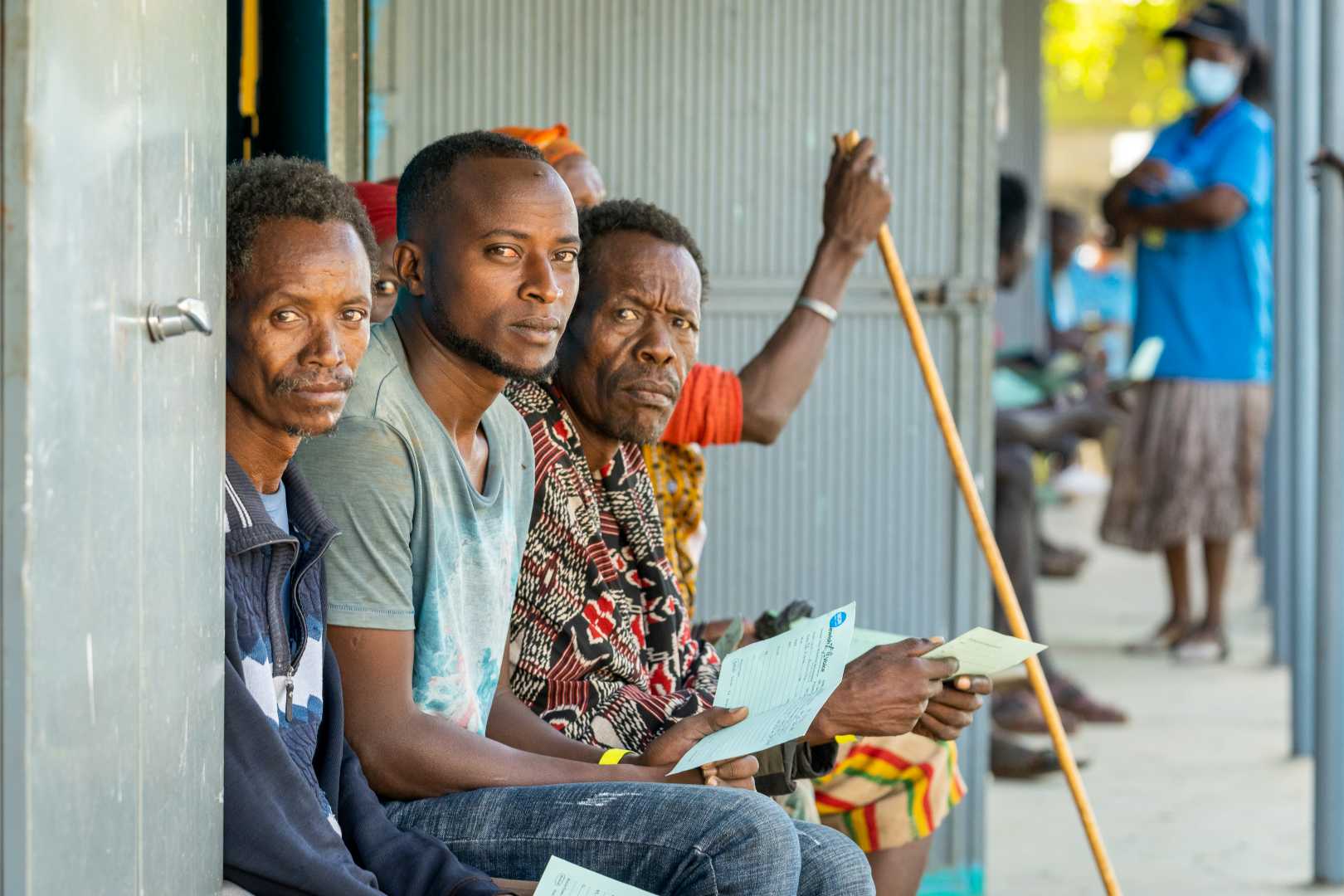
Pray for two locally-led outreaches this month: Ethiopia's Beta Avraham congregation serving the Kechene Jewish community and Zimbabwe's first Lemba-run medical clinic.

Prayer points for the Jewish people during a week of mixed emotions: remembering the October 7 Hamas attack anniversary and celebrating Simchat Torah.

The seven-day Feast of Sukkot is one of the most unusual holidays God established for Israel to observe. In this article, we explain the various observances God commanded for Sukkot and the invitation He includes by adding instructions for an eighth day, which is known as Shemini Atzeret.